
Loading...

Be transparent: show how you verified a story, name who wrote it, and show up on the schedule you promised. These three moves, visible sourcing, a clear author identity, and reliable cadence, do more for reader trust than any polished mission statement. The research backs this up, and the tactics below turn it into daily practice.
TL;DR:
- A visible verification note should name sources, describe checks, and state remaining uncertainty; research found it raised trust ratings only when readers could see it.
- Because 78% of U.S. adults say they check news facts themselves, place links to original documents beside claims rather than in a general source list.
- An effective author bio pairs one relevant credential with a checkable achievement, a direct contact method, and a clear limit on the writer’s expertise.
- Choose a publishing frequency you can sustain for a year, make it public, and explain any change in topics before readers encounter the shift.
- For AI assisted drafts, disclose what the tool handled and name the human reviewer; readers need provenance, not a long policy statement.
Trust accumulates through small, repeatable choices rather than grand gestures. Plain language is the foundation: short sentences, specific claims, and no hedging where a fact is confirmed. If a sentence needs rereading, it is too dense for a trust-building piece of writing.
Visible sourcing comes next. Readers do not need a footnote on every clause, but they need to see where a claim comes from when it matters.
An explain-your-process box works as a short, visible note near the top of an article. A simple three-sentence template: what we set out to find, how we checked it, and what remains uncertain. Readers who see this box consistently rate articles as more reliable.
Consistency matters just as much as any single tactic:
Small rituals close the loop. A visible reply policy, a habit of answering reader questions in comments or email, and an occasional note on what you plan to cover next all signal that a real person is behind the byline.
Pro Tip: Keep your explain-your-process box to three sentences. Longer boxes get skipped; short ones get read.
A bio works best when it answers four questions fast: who you are, what you cover, why you are qualified to cover it, and how a reader can reach you. Skip the resume dump. One relevant credential beats five unrelated ones.
Disclosure templates work best short and specific. For AI-assisted text: "This draft was AI-assisted and reviewed and edited by [name] before publication." For sponsorships: "This piece was commissioned by [sponsor]; our editorial choices were not reviewed by them before publication." One sentence, no jargon.
Bios belong in three places: a full author page, a hover card on the byline, and a one-line version at the top or bottom of the article itself. A named, specific author raises perceived warmth more than an anonymous "staff" byline, but oversharing personal detail that has nothing to do with the topic reads as performative rather than trustworthy.
Pro Tip: Pair one competence signal with one warmth signal in every bio: a credential, then a human detail like how you got into the beat.
Readers cannot verify most claims themselves, so they look for signals that someone already did the checking. Inline attribution handles most of this without breaking the flow of a sentence: naming the report, the agency, or the person right where the claim sits.
A short "how we verified this" panel does more work than a long methodology page. Three elements are enough:
Correction policies deserve the same visibility. Label edits with a timestamp and a one-line note on what changed and why, rather than silently rewriting a paragraph. The Reuters Institute frames this as showing readers why belief is justified: visible verification, transparency tailored to the piece, and public acknowledgment of mistakes.
Nearly 8 in 10 U.S. adults, 78%, say they check the facts in news stories themselves, according to Pew Research Center. That habit means your source trail is not decoration, it is the thing a sizable share of your audience will actually use.
When AI drafting tools are part of the workflow, the Reuters Institute notes that generative AI raises provenance anxiety among readers, so a brief, specific disclosure of what was AI-assisted and who reviewed it matters more than a long policy statement.
Reliability compounds. A newsletter that lands every Tuesday or a blog that posts twice a month, stated plainly, builds more trust than an irregular flood of posts followed by silence.
Readers forgive change. They do not forgive discovering it on their own.
Engagement signals trust when it runs both ways. A reply thread where you actually answer questions, a short reader survey, or a story built partly from reader-submitted tips all show that the relationship is not one-directional.
Track what correlates with trust rather than raw traffic: return visit rate, reply volume, and newsletter opt-ins tend to move together when a piece lands well. Small experiments, testing one format change at a time, show you where that trust is actually growing rather than just assumed.
The evidence lines up across several studies. Only 9% of U.S. adults felt "very confident" they could distinguish original reporting from aggregated content, according to Pew Research Center, a gap that clearer sourcing and visible process notes can narrow.
Transparency works only when it is specific and visible, not a blanket policy page nobody reads. If you think we got something wrong here, or you have a better template, tell us.
— Tilen
When an AI draft is part of your process, the disclosure matters more than the tool. We built Semihuman for writers who draft with AI assistance and then want the final text to read in their own voice before it reaches readers, restructuring phrasing, checking against detectors like Turnitin, GPTZero, and Copyleaks, and keeping the meaning intact.
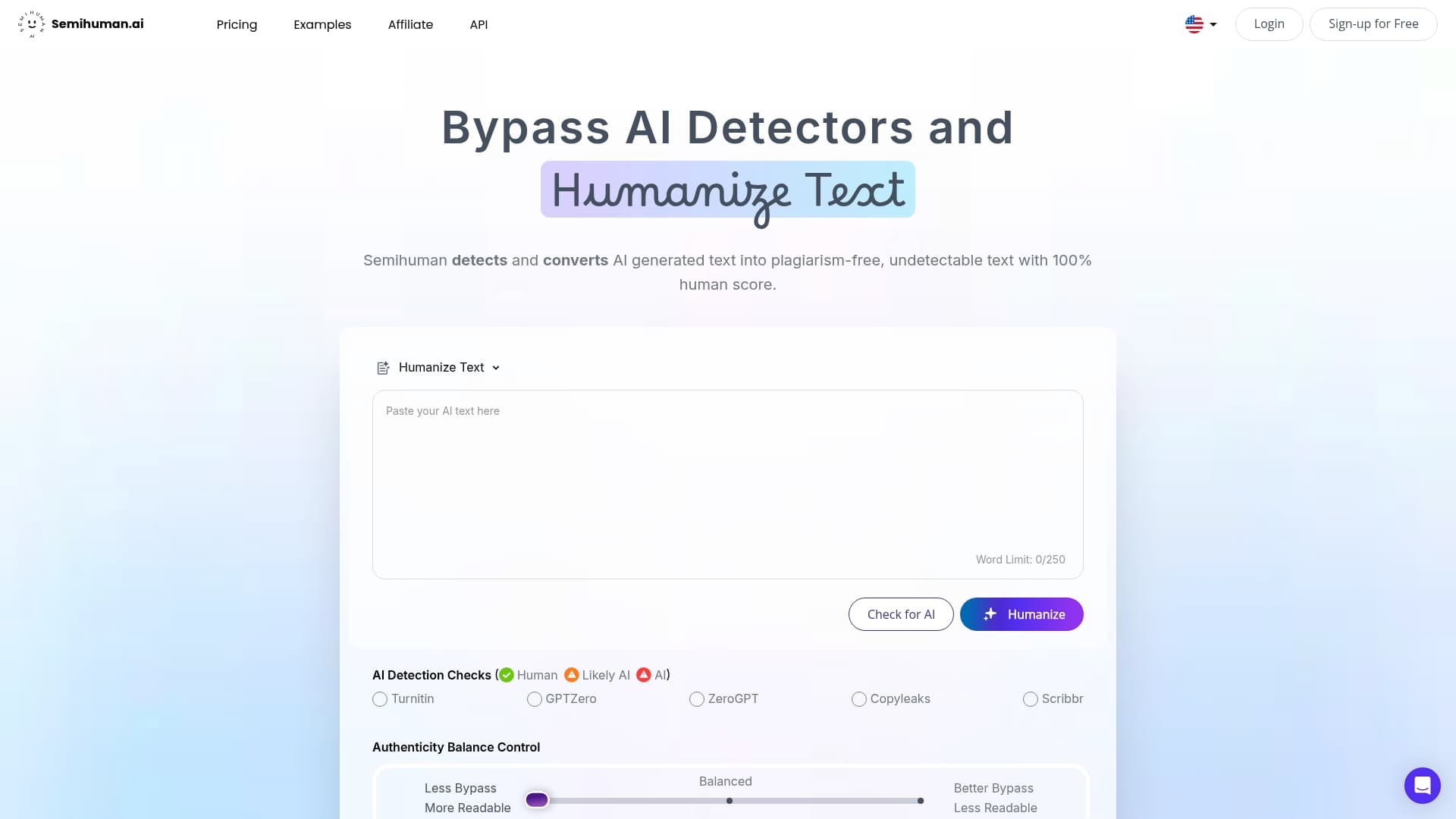
Our Free, Basic, and Pro plans fit individual writers and small teams humanizing drafts one piece at a time. Publishers and teams running this at scale can use our Developer, Business, and Enterprise API access to fold humanization into an existing editorial pipeline. If you already write a short AI-disclosure line for readers, as covered above, our tool fits right before that step, not instead of it.
The four keys that come up most often in research are transparency, reliability, authenticity, and engagement: showing your sourcing, keeping your promises on schedule and quality, disclosing limits and conflicts honestly, and responding to readers directly. Writers who cover all four consistently see stronger reader retention than those who focus on just one.
A writer earns trust by making verification visible, naming sources inline, and showing a short process note on how a claim was checked. Pairing that with a specific, named author bio and a cadence readers can predict closes most of the gap.
Demonstrating trust means showing the work: a visible source trail, a labeled correction when something changes, and a reply to reader questions in public. According to the Center for Media Engagement, a short, visible explain-your-process box measurably raises how reliable readers rate an article, which only happens through demonstration, not assertion.
Use plain, specific language and attribute claims right where they appear instead of relying on a vague "sources say." Short, direct sentences and named sources read as more trustworthy than hedged, generic phrasing.
Yes, a brief, specific line naming what was AI-assisted and who reviewed it is enough. The Reuters Institute notes that generative AI increases reader anxiety about where content comes from, and a short disclosure addresses that directly without needing a long policy statement.



Start
Humanizing
for Free!
Humanize