
Loading...

The best blog posts share one habit: they start with a specific reader problem and answer it in the first few sentences, then every section earns its place. The rest is craft: a tight outline, short paragraphs, verified facts and several rounds of editing. If an AI tool wrote your first draft, the editing round matters most, and that is where Semihuman restructures and humanizes the text so it reads like a person wrote it.
This guide walks through the full process in order, with what to do at each stage and where writers usually go wrong.
Most weak posts fail before the first sentence, because the writer picked a keyword rather than a problem. Start by listing what your audience is actually trying to do. Good raw material comes from your inbox, blog comments, Reddit, niche forums, Facebook groups and customer surveys, as Noel Cabrals topic research guide suggests.
Then check intent. Ahrefs describes three Cs of search intent: content type (blog post, landing page, category page), content format (guide, tutorial, review, list) and content angle (beginner, advanced, opinionated). It also says a blog post only makes sense when people searching the keyword want information. If the top results are product pages, a blog post is the wrong tool.
A quick test before you write: can you answer these in one line each?
If you cannot, the topic is still too broad. Narrow it until you can. Blog writing is a subject. How to edit an AI draft so it sounds like you is a post.
Search Engine Lands eight-step blog workflow begins the same way: find a proven topic using audience questions, customer insight, competitor research and social media, then choose a template that matches search intent. Notice that the topic comes before the template and the template before the headline.
An outline is the cheapest place to fix a bad post. Arrange your main points in logical order, make sure each one supports your central claim, and break each into sub-points that will become your headings.
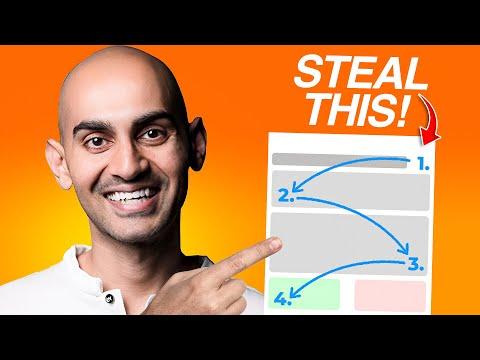
The University of Wisconsin–Madison Writing Center advises that effective blog posts make two or three focused points and support them with evidence. It also notes that numbering points helps you limit scope and helps readers follow the structure. A single-point post is perfectly acceptable. A post with eleven loosely related points is not.
A simple outline that works for most informational posts:
On length, let the topic decide. Search Engine Land reports that the average Google top-10 result runs 1,447 words, which is a useful reference point rather than a target. Google itself says to create content for people, not to hit a particular word count. Cover the topic completely, then stop.
The headline has one job: tell the right reader what they will get. Wisconsins guidance is to keep it ten words or less, make it intriguing and include the keywords people search for. Specific outcomes and numbers tend to beat vague promises. Edit an AI draft in five passes tells the reader more than Smarter content tips.
Your first sentence should sound conversational and state the main point. Do not clear your throat with a paragraph about how busy the internet is. A reader who landed from a search wants confirmation within seconds that they are in the right place. Give a short direct answer near the top, then use the rest of the post for detail.
Two habits improve openings immediately:
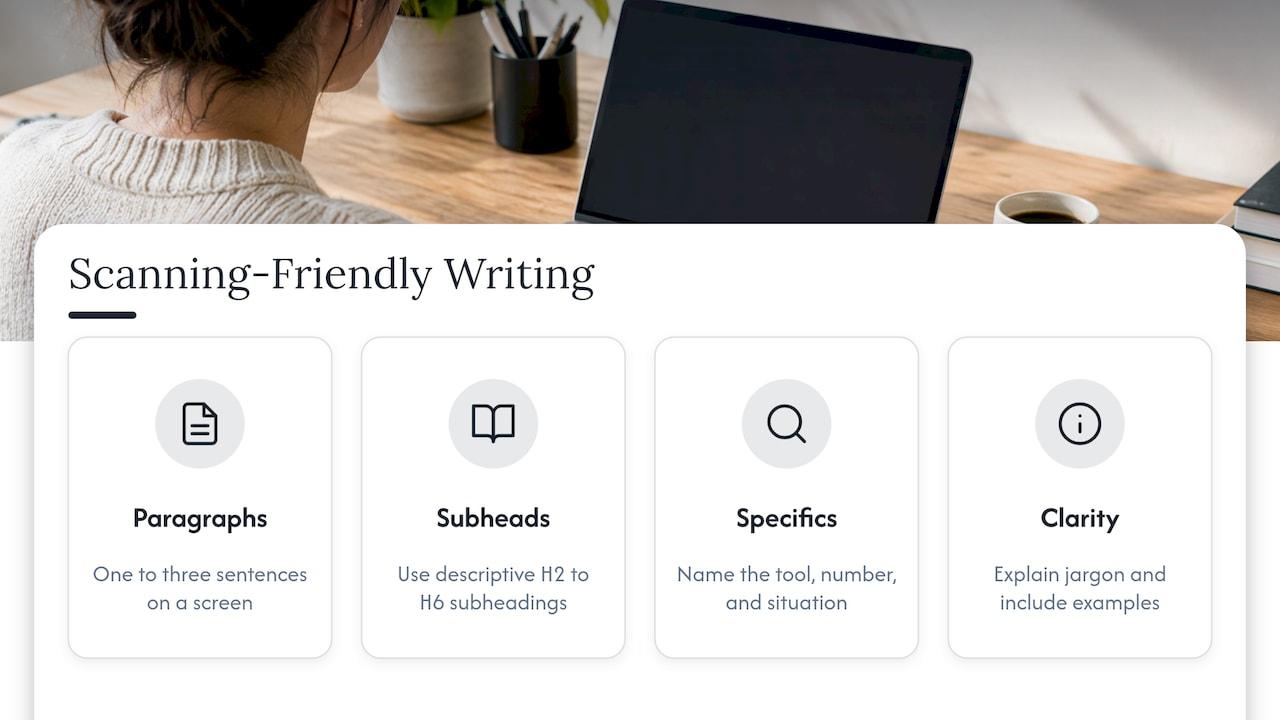
Readers skim before they commit. Help them with structure, not decoration.
Keep paragraphs short. One to three sentences on a screen is a good rule. Search Engine Land recommends short paragraphs, bullet points, numbered lists, storytelling and visuals to keep readers moving. Ahrefs beginner blogging tips add short sentences, simple words and a conversational tone.
Use descriptive subheadings. Step 3 tells nobody anything. Fact-check every number does. Ahrefs recommends descriptive H2 to H6 subheadings, and Search Engine Lands Amy Copadis argues that clear, specific subheaders also help content get picked up in AI search, because each section works as a self-contained chunk.
Be concrete. Specific details beat abstractions. Name the tool, give the number, describe the situation. Kristen Stieffel borrows Roy Peter Clarks advice to get the name of the dog: the small real detail is what makes a reader believe you.
Explain jargon and show examples. WordPress.coms blog guide says the body should favor clarity and logical order, explain jargon, link to trusted sources and include examples or personal anecdotes. Plan space for images as you write, not afterward. Our own notes on how visuals in blog posts boost engagement cover where they help most.
Write for one person. Picture a single reader and use you. Our piece on writing for your audience goes deeper on tone and voice.
Many bloggers now draft with AI. Used well, it saves hours on structure and first passes. Used badly, it produces pages that repeat what everyone else says. Hostingers tutorial notes that using AI does not make a page unsuitable for Google Search, but AI-assisted articles need extra attention: similar pages can repeat advice without answering a distinct need, and generic passages add nothing.
The same tutorial points out that AI-assisted pages still have to meet Googles Search Essentials and spam policies, and that generating many pages without adding value can run into the scaled content abuse policy. So volume is not the goal. A smaller number of posts that carry real experience will serve you better.
HubSpots Ramona Sukhraj puts the division of labor well: AI can summarize what is out there, but only the writer knows what they believe and have seen. Her rule is simple: if you cannot source a claim, do not ask AI to write it.
A practical routine for an AI-assisted post:
We go into why the editing pass is unavoidable in why AI writing needs editing, and into the SEO side in AI content for blogs.
A blog post is only as trustworthy as its weakest number. Fact-checking is a separate job from proofreading, and the Content Marketing Institutes fact-checking checklist says why: you are checking substance, not spelling.
Its core points:
HubSpots routine for AI-assisted drafts is a good companion: highlight every claim, link it to a current primary source, open the link to confirm it works, prefer sources from the last two years and cut anything you cannot verify. That last step is the hard one. If a sentence sounds great and you cannot verify it, it goes.
Link to the page that states the exact claim, not a nearby page on the same subject. Readers click, and a mismatch costs you trust faster than a missing link would.
One edit is not enough. WordPress.coms guide says to edit more than once and notes that reading the post aloud mirrors how readers process it. Ahrefs makes the same recommendation for beginners.
A workable sequence:
| Pass | What you check |
|---|---|
| 1. Purpose and structure | Does the post answer the one question? Is the order logical? |
| 2. Evidence | Is every claim sourced or based on your own experience? |
| 3. Clarity | Short sentences, simple words, jargon explained |
| 4. Sentence level | Names, dates, numbers, repeated words, filler |
| 5. Read aloud | Anything you stumble over gets rewritten |
Read aloud, AI-flavored text gives itself away: three-part lists everywhere, identical sentence lengths, transitions nobody says out loud. If you hear it, rewrite it or run the passage through a humanizing step and then re-read.
Googles guidance is clear that SEO should help search engines discover and understand people-first content, not replace it. Its self-check questions are worth keeping next to your draft: does the content provide original information, a substantial and complete description of the topic and insight beyond the obvious, and will readers leave feeling they learned enough to reach their goal?
With that as the base, the on-page basics are modest:
Keyword stuffing is the classic mistake. When keywords are woven in during the rewrite instead of bolted on afterward, the text stays readable. Our digital marketing content tips and guide to authenticity in blogging show how to balance the two.
A published post with no distribution is a draft nobody reads. Search Engine Lands workflow says to build promotion into the post from day one: decide who should see it, what quote or chart they would share, and where it will be posted before you finish writing.
Two things help. First, write at least one passage that stands alone as a shareable idea, which we cover in creating shareable blog content. Second, plan the channels: email, social, communities where your readers already ask questions. For a deeper look at promoting your published posts, a dedicated walkthrough covers the options in more detail.
End with one specific next step: a comment, a subscription, a related post. Keep it to one.
The people-also-ask box for this topic includes common blogging mistakes. These come up again and again:
We built Semihuman around one observation: the drafting step has become cheap, and the editing step is where a post either sounds like a person or doesnt.
That is why our tool is designed to detect AI-generated text, restructure it for natural readability and rewrite it so it reads as human-authored. It also integrates your keywords, so SEO is part of the rewrite instead of an afterthought. Our approach is aimed at neutralizing the patterns that major AI detectors such as Turnitin, GPTZero, Copyleaks and ZeroGPT look for, while keeping the meaning of your text intact.
Best practices for blog writing have not changed: know your reader, verify your facts, edit in passes. What has changed is how fast you can reach a solid first draft. We think the right workflow is to use that speed, add your own experience, and let a dedicated humanizing step handle the mechanical polish, so your time goes into the judgment only you can supply.
Tilen
If you draft with AI, the humanizing and restructuring pass is the step to automate. Semihuman takes AI-generated text and rewrites it to read as naturally human-authored, with keyword integration for SEO, and it works from a web interface for individual writers.
You can start with the Free, Basic and Pro plans on the Semihuman plans page. If you publish at scale or want the tool inside your own publishing workflow, the Developer, Business and Enterprise plans on the API access page are built for integration.
As long as it takes to answer the question completely, and no longer. Search Engine Land reports that the average Google top-10 result is 1,447 words, but Google says content should be written for people rather than to meet a word count. Check what ranks for your keyword and match the depth, not the number.
Yes. Hostingers tutorial says AI use does not by itself make a page unsuitable for Google Search, provided the page meets Search Essentials and spam policies and adds real value. Add your own experience, verify every claim and edit the draft so it reads naturally.
The opening, because it decides whether the reader stays. State the main point in a conversational first sentence, as the Wisconsin Writing Center advises, then support it with two or three focused points and evidence.
More than once. Edit first for structure, then for evidence, clarity and sentence-level details, and finish by reading the post aloud. WordPress.coms guide recommends multiple editing rounds and reading aloud because it mirrors how readers process text.
Writing for keywords instead of readers, packing in too many points, leaving long walls of text, publishing unverified claims and skipping the edit. Fact-checking against original sources, as the Content Marketing Institute checklist describes, prevents the most damaging of these.
Comenzar
Humanizar
¡gratis!
Humanizar