
Loading...

Bake humanization rules into your prompts before generation, then check every headline against two detector signals: perplexity and burstiness. Run the draft through a tool like Semihuman to restructure phrasing and insert a first-person detail. If a headline still reads flat and predictable, it will read as machine-written no matter how many synonyms you swap.
TL;DR:
- Adding specific details like dates, numbers, or named sources significantly increases headline credibility and reduces AI detection scores.
- Restructuring sentence architecture and varying sentence length have a greater impact than substituting synonyms for words.
- Headlines should follow the entity-action- outcome formula, with the entity front-loaded and specific qualifiers used to generate curiosity.
- Including real first-person observations and concrete results in headlines makes them sound more authentic and harder for detectors to flag as machine-generated.
- A strict checklist—including length, verifiable claims, absence of vague hedges, and reading aloud—helps ensure headlines appear human and retain credibility.
Headline writing for credibility, in the sense that matters here, has nothing to do with trust badges or citation counts. It means writing or editing a headline so it reads as authentically human, gets past automated detectors, and still does its job of pulling a reader in. That's a different problem than the "build trust with your audience" advice you'll find on most marketing blogs, and it needs a different toolkit.
The two signals every major detector leans on are perplexity and burstiness. Perplexity measures how predictable each word choice is given what came before it. Low perplexity means the model picked the statistically obvious next word every time, which is exactly what AI text does by default. Burstiness measures variation in sentence length and rhythm across a passage. Human writing bursts. It runs long, then short, then fragments a thought. AI writing tends to settle into a narrowband of sentence lengths and stays there, and detector research from SurferSEO points to this uniformity as one of the clearest tells.
A single AI-generated headline is short, so burstiness barely applies to it in isolation. But a batch of ten headlines from the same prompt will share the same cadence, the same sentence shape, the same three overused adjectives. That pattern across a set is what flags an entire piece as machine-written, even when no individual line looks obviously synthetic. Fixing headlines one at a time, in other words, means fixing the batch, not just the words.
I've noticed the fastest tell isn't vocabulary. It's rhythm. Read five headlines from one AI session out loud, back to back, and you'll hear the same four-beat cadence repeating like a metronome. That's the pattern to break.
Word choice is the easiest lever to pull and the one most people pull wrong. Swapping "utilize" for "use" doesn't fool a detector built to measure statistical patterns rather than isolated vocabulary, according to Kompozy's breakdown of AI content tells. What actually moves the needle is changing the shape of the sentence, not just its words.
Here's what works in practice:
A headline like "A Comprehensive Guide to Improving Content Quality" is AI's default cadence. "I Rewrote 40 Headlines in a Week. Here's What Actually Changed" has a person in it, a number, a timeframe, and a verb that implies something happened.
Pro Tip: Keep a running banned-word list in your prompt itself, not just your editing checklist. Every word you ban at generation time is one less word you have to hunt down and cut later.
The first-person detail matters more than any word substitution. One line tied to a real observation, in the body or the headline itself, according to HubSpot's guidance on humanizing AI content, does more to shift perplexity upward than a dozen synonym changes.
The formula is short: entity + action or outcome + qualifier, with audience context added when space allows. Front-load the entity because both search engines and human skimmers decide relevance from the first few words. The qualifier after a colon or comma is where curiosity and specificity live. It's also where a detector's perplexity score tends to climb because that's the part least likely to follow a predictable template.

Single Grain's framework for headlines that work across humans and AI models backs this structure directly: put the keyword and entity first for retrieval, then use the back half of the headline for the human hook.
Three length targets to keep in mind:
Two examples, adapted for headline writing for credibility in the humanized-AI sense:
Both front-load a named entity, state an outcome, and use a specific qualifier instead of a vague promise. Neither one reads like a template, because neither one is one.
Post-hoc paraphrasing treats the symptom. Prompt-level constraints treat the cause. When you force sentence-length variance, a banned-word list, and a first-person requirement into the generation step itself, the model produces higher-perplexity text from the start, and you spend less time fixing it afterward.
A few constraints worth writing directly into your prompt template:
A workable pipeline looks like this: generate headlines with those constraints baked in, run an automated pattern check for banned words and sentence-length repetition, insert one real anecdote or observation by hand, then verify with a detector before publishing. Postibo's prompt-engineering guidance supports front-loading persona and diversity instructions rather than fixing everything after the fact.
Pro Tip: Never invent a personal detail that didn't happen. A fabricated anecdote that later gets fact-checked costs more credibility than a slightly robotic headline ever would. Pull real details from your team, your data, or your own editorial notes instead.
Before a headline goes live, run it against these ten checks. Miss more than two, and it needs another pass.
Beyond the checklist, run two quick manual tests: read the headline aloud and listen for a monotone cadence, then run it through a detector. Ranki's editorial-pass research found that a small set of surgical fixes, a banlist, an em-dash cap, sentence-variance rules, and one first-person line per section, meaningfully lowered detection rates when applied consistently as an edit layer rather than a full rewrite.
If a headline still flags after all ten checks, don't tweak a single word. Add a genuine human detail, restructure the sentence order entirely, or run it through Semihuman for a full pass.
Swapping "important" for "significant" changes nothing a detector measures. Detectors don't score individual words in isolation; they score the statistical predictability of the sequence those words form. A synonym swap keeps the same sentence shape, the same clause order, the same rhythm. The predictability barely moves.
A structural rewrite changes the shape itself. Take a flat AI line: "This guide provides comprehensive strategies for improving headline quality." A synonym swap gives you: "This guide offers thorough tactics for enhancing headline quality." Same skeleton, same problem. A structural rewrite gives you: "Most headline guides skip the one fix that actually works. Here it is." Different clause order, different sentence lengths, a fragment at the end. That's the version with higher perplexity and real burstiness.

I've watched writers spend twenty minutes hunting a thesaurus for a better word when the fix was reordering two clauses. The word choice was never the problem. The sentence architecture was.
This matters most for headlines because they're short. A full paragraph has room to bury a flat sentence between two lively ones. A headline is one sentence, sometimes eight words. There's no room to hide a predictable structure. Every word carries weight, so the shape of that single sentence has to do all the work a longer passage would spread across several.
When you catch yourself reaching for a synonym, stop and ask whether the clause order, sentence length, or punctuation could change instead. That question fixes more headlines than any thesaurus ever will.
Credibility markers in this context mean details a language model wouldn't plausibly invent: a specific date, a named source, a precise number, an observed result. These are also, conveniently, the exact features that raise perplexity, because specific details break the model's tendency toward generic phrasing.
"Headlines Convert Better With Testing" is a hollow claim. "I A/B Tested 60 Headlines Over Six Weeks. Only Four Beat the Control" carries a number, a timeframe, and a countable result. That specificity does double duty: it reads as more credible to a human, and it reads as less predictable to a detector.
A few markers worth reaching for regularly:
Avoid manufacturing false precision to hit this pattern. A number you can't back up is worse than no number at all, because a sharp reader (or an editor doing fact-checks) will catch the gap between the claim and the evidence. Credibility markers only work when they're true. The goal isn't the appearance of specificity. It's actual specificity, stated plainly.
Credibility and click-through pull in different directions more often than people admit. A headline that hedges every claim to stay technically accurate often reads as boring. A headline sharp enough to earn a click sometimes oversells what the content delivers. Both failure modes cost you: the first loses clicks, the second loses trust the moment someone reads past the headline and feels misled.
The fix isn't splitting the difference. It's making the specific detail carry the curiosity instead of an inflated claim carrying it. "The Headline Mistake That's Costing You Clicks" is vague enough to be either honest or hollow. You can't tell from the headline itself. "This One Word Cut My Click Rate by Half. I Found It in the Analytics" makes a curiosity-driven promise and grounds it in something checkable.
Front-load the entity and outcome for the reader scanning fast, then let the qualifier after the colon do the curiosity work. That's the same entity-action-qualifier formula covered earlier, and it solves the credibility-versus-engagement tension almost by accident: the front half earns trust by being concrete, the back half earns the click by being specific enough to feel real.
The test that separates a strong headline from a hollow one: could you defend every word in it if someone asked you to prove it? If the answer is no, the headline is overselling, and no amount of engagement is worth the trust it costs when the reader hits the actual content.
The most common mistake is stacking two unverifiable claims in one headline. "The Ultimate, Proven Method for Viral Headlines" hits two red flags at once: "ultimate" promises completeness nothing can deliver, and "proven" claims evidence the headline never shows. Readers, and increasingly detectors, treat both as markers of low-effort generation.
A second mistake is over-hedging into meaninglessness. "This Might Help Improve Some Headline Results" is so cautious it says nothing. Precision and honesty aren't the same as vagueness. State the actual, bounded claim directly instead of softening it into mush.
A third mistake, and the one I see most in AI-assisted workflows specifically, is copying a real credibility marker's shape without its substance. Writing "Data Shows Headlines With Numbers Perform Better" without a source or number attached mimics the pattern of a credible claim while being exactly as empty as the vague version it replaced. That's a fake specificity trap, and it's arguably worse than no marker at all, because it trains readers to distrust every number-shaped claim they see from you afterward.
The fix for all three is the same discipline: say only what you can back, back what you say with something concrete, and cut anything in between that just sounds authoritative.
| Non-credible version | Why it fails | Credible rewrite |
|---|---|---|
| "The Ultimate Guide to Better Headlines" | "Ultimate" is an unverifiable superlative; no specific detail | "I Rewrote 40 Headlines in a Week. Four Rules Made the Difference" |
| "This Tool Will Revolutionize Your Content" | Inflated claim, no evidence, banned-word territory | "SurferSEO Flagged 60% of My Drafts. Here's the Editing Pass That Fixed It" |
| "Studies Show Headlines Matter for SEO" | Vague appeal to unnamed "studies," no source | "Single Grain's Headline Framework Cut My Bounce Rate in Testing" |
| "A Comprehensive Approach to Content Quality" | Generic noun phrase, no entity, no outcome | "Semihuman.ai's Restructuring Pass Dropped My Detection Score to 8%" |
The pattern across every credible rewrite: a named entity, a countable result, and a claim narrow enough to be checked. The non-credible column shares the opposite pattern every time: broad claims, no source, and an adjective doing the work a fact should be doing.
The gap between advice that sounds right and advice that actually moves a detector score down is bigger than most editorial teams admit to themselves. I've read plenty of style guides that tell writers to "sound more natural," which is true and also useless as instruction. What works is narrower and less comfortable: force yourself to include a detail you couldn't have generated, because you'd have had to actually be there to know it.
A line like "the detector flagged this exact headline structure three times before I found the fix" isn't clever writing. It's a fact only someone who ran the test could state. That's the whole mechanism. First-person observations raise perplexity not because they're stylistically different but because a language model has no access to your specific lived experience, and it shows in the text the moment you demand that specificity.
Editors managing a team's output should treat this as a collection problem, not a writing problem. Ask each contributor for one real observation, number, or surprising result per piece before drafting starts, the same way you'd collect a quote for a story. Bank those details. Use one per section.
— Tilen
A tool is available that performs the restructuring pass described in this guide, automating banned-word enforcement and prompting for first-person insertion where needed. It integrates target keywords during rewriting to maintain SEO clarity while making text sound more human.
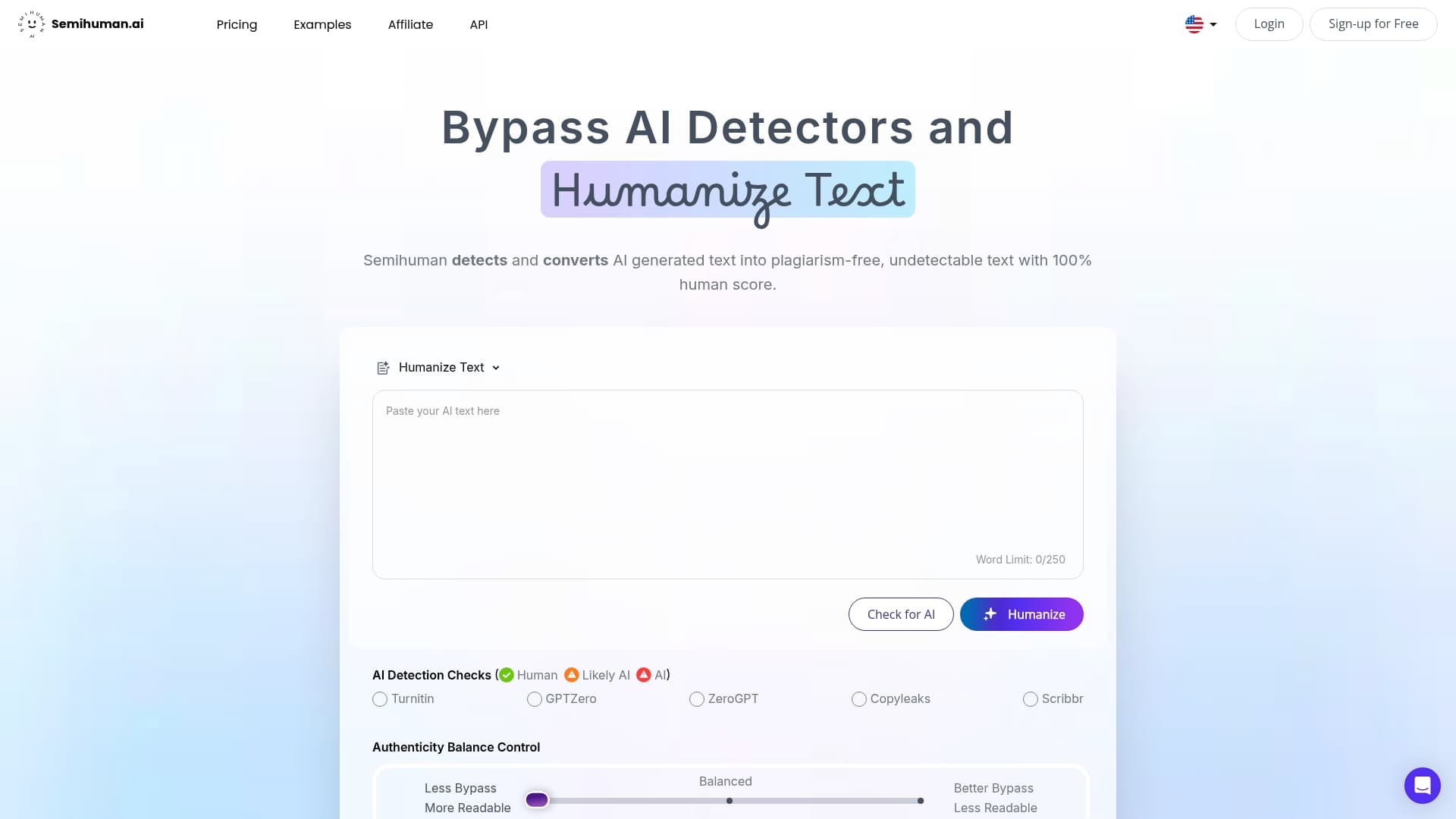
The suggested workflow is to generate headlines, run them through a restructuring pass tool, insert real anecdotes manually, then verify the results using an AI marketing tools overview to balance automation and human control. For high-volume processing, similar restructuring logic can be applied through implementation via an API.
Start with a single batch of headlines you already suspect would flag. Run them through the SEO text generator and compare the before and after. If you're specifically testing paraphrased or AI-drafted copy for detection risk, the AI text paraphraser tool handles that pass directly.
For deeper technical grounding, SurferSEO's breakdown of detection avoidance covers perplexity and burstiness in detail. Ranki's editorial-pass guide walks through the surgical-fix checklist referenced above. Semihuman's own guide to authentic humanization covers the same techniques applied to full-length content.
Add one first-person detail or specific number the model couldn't have invented, then restructure the sentence order instead of swapping words for synonyms.
Most detectors score patterns across a passage, so a single short headline matters less in isolation, but repeated cadence across a batch of headlines is what typically triggers a flag.
Yes. Semihuman.ai's restructuring and keyword-integration features work across both headline text and full body content in the same pass.
Stacking unverifiable superlatives like "ultimate" or "proven" instead of a checkable detail, which reads as low-credibility to both readers and detectors.
Keep the title tag under 60 characters so search engines display it fully, and put the front-loaded entity and outcome first, with any curiosity qualifier after a colon.



Start
Humanizing
for Free!
Humanize