
Loading...

SEO copywriting essentials come down to one habit: answer the reader's question in the first sentence of every section, then back it with specific, checkable facts. The first move on any new piece is mapping search intent and drafting an answer-first outline before you write a single paragraph of body copy. Everything else in this guide, from headline formulas to schema markup, builds on that one decision.
TL;DR:
- Structuring content with answer-first headings and specific details improves chances of being featured in snippets and AI overviews.
- Naming real tools, standards, and figures enhances credibility and helps search engines verify the content's expertise.
- Focusing on intent matching and building comprehensive, independent subtopics increases ranking potential more than keyword stuffing.
- Optimizing metadata, schema markup, internal links, and images is essential for ranking and user engagement, not just the prose.
- Incorporating genuine personal experience in the copy boosts trust signals and distinguishes humanized content from AI-generated drafts.
SEO copywriting is the practice of writing content that ranks in search engines and also persuades the human reading it. It's a two-job discipline: satisfy the algorithm's read on relevance and authority, and satisfy the person deciding whether to keep reading, click a link, or buy something. Miss either job and the page underperforms, no matter how polished the writing looks.
The "answer-first" part matters more now than it did even two years ago. Search results increasingly surface AI overviews and chat-based answers pulled directly from web pages, and those systems favor content that states its conclusion up front rather than building to it. Answer-first openings paired with clear heading hierarchies increase the odds a section gets pulled into featured snippets and AI overviews, because both Google's snippet algorithm and large language models scan for a tight, self-contained answer near the top of a block of text. If your H2 buries the point in paragraph three, it gets skipped in favor of a competitor's H2 that doesn't.
This is also where E-E-A-T (Experience, Expertise, Authoritativeness, Trustworthiness) earns its keep. It's not a checkbox exercise. It's a set of signals, mostly specificity, that tell readers and ranking systems this content came from someone who actually knows the terrain.
Three things separate essentials-grade SEO copy from filler:
Copywriting for SEO used to mean stuffing a keyword into every other sentence. That approach is dead. Modern SEO writing tips center on intent matching, entity specificity, and structure, with keywords showing up naturally because you're actually answering the question, not because you forced them in.
Every piece of effective SEO copy shares five traits, and they matter in this order. Get the first two wrong and no amount of polish on the last three saves the page.
Readability and structure aren't cosmetic. Short paragraphs, bullet points, and visual breaks keep readers engaged and support the dwell-time signals that ranking systems track. A wall of text loses readers before it has a chance to persuade anyone of anything.
Entity specificity deserves its own line item because it's the part most writers skip. Instead of "many SEO tools help with keyword research," name Ahrefs, SEMrush, or Google Search Console. Instead of "experts recommend short paragraphs," cite the actual guide that says so. This isn't about jamming in brand names. It's about giving your copy the kind of texture that only comes from someone who has actually used the tools they're describing.
Pro Tip: Before you write a single sentence of body copy, write the H2 you'd want an AI assistant to quote back to someone. If that sentence can't stand alone as a complete, accurate answer, the outline needs work before the draft does.
Metadata and internal structure round out the checklist. A meta title that buries the primary keyword past character 40, an FAQ section with no schema markup, or a body with zero internal links all leave value on the table. None of these fixes are hard. They're just easy to forget when you're focused on the sentence-level writing.
Research is where most SEO copy either earns its ranking or quietly fails before a word gets written. The standard workflow moves through research, drafting, and editing in that order, and skipping straight to drafting without mapping intent is the single most common reason SEO content underperforms despite decent writing.
Start by identifying what the searcher actually wants, not just what words they typed. A query like "SEO copywriting essentials" signals someone past the beginner stage. They don't need SEO defined from scratch. They want a practical, prioritized rundown they can act on today. Compare that to "what is SEO copywriting," which does need a definition. Reading the intent behind a query correctly is worth more than any keyword density calculation.
Once intent is clear, build your subtopic list from what's already ranking:
With subtopics in hand, build the outline before touching prose. Each H2 should function as an independent unit that answers a specific question completely, in case that's the only section an AI system or a scanning reader ever sees. A workable outline for a piece like this one might run:
Notice that none of those headings depend on reading the one before it to make sense. That independence is the whole point. It's also what makes an outline genuinely data-driven rather than a guess dressed up as strategy.
Drafting is where the outline becomes something a human wants to finish reading. Get the first few words wrong and the rest of the craft never gets a chance to matter.
Start with the headline and meta title together, since they're doing overlapping jobs. Keep the meta title in the 50 to 60 character range with the primary keyword appearing early rather than tacked on at the end. Titles in that length range with the keyword placed early consistently outperform longer, keyword-buried alternatives on click-through rate, largely because search engines truncate anything longer and readers skim left to right.
A few headline formulas that consistently work without feeling formulaic:
Inside the body, the rule that matters most is one you already saw applied to headings: put the answer in the first sentence of every section, every time, no exceptions. If a reader (or an AI summarizer) reads only that first sentence, they should walk away with something useful.
Bucket brigades still earn their reputation. Short transitional phrases like "Here's the catch" or "So what does that mean in practice" break up long stretches of explanation and pull a skimming reader back into the text. Bucket brigades and tight micro-formatting keep long-form copy readable and increase the odds a section gets selected for AI summaries, mainly because they signal a shift in the argument that both humans and extraction algorithms can latch onto.
Keep paragraphs short, but not uniformly short. A one-sentence paragraph after three longer ones reads as a deliberate punch, not a formatting tic. Vary it the way a person talking to you would vary it, pausing on a point that matters and moving fast through connective material that doesn't.
Pro Tip: Read your draft's first sentence under every heading, in order, skipping everything else. If that sequence alone tells a coherent, accurate story, your structure is doing its job. If it reads like a string of non sequiturs, the answer-first discipline slipped somewhere.
Subheads and calls to action should track back to intent, not just to keyword coverage. A CTA after a how-to section should invite the reader to act on what they just learned, not pivot into an unrelated pitch. Consistency between what a section promises and what a subhead actually delivers is what keeps bounce rates down and time-on-page up.
Editing is where good drafts become pages that actually rank. This is also the stage most writers rush, which is a mistake given how much of the ranking signal lives in metadata and structure rather than prose quality alone.
Run through this sequence before anything gets published:
One more thing worth flagging on keyword density: there's no magic percentage to hit. Multiple SEO methodology guides recommend writing for intent first and letting keyword coverage happen naturally, rather than targeting a fixed density number. If you're rereading a sentence and it sounds stilted because you jammed a keyword into it, cut the keyword. Natural language wins over forced density every time a human actually reads the page.
Common mistakes worth catching at this stage: headings that tease instead of answer, meta descriptions copied verbatim from the first paragraph, internal links all pointing to the homepage instead of relevant subpages, and FAQ answers that ramble past four sentences when two would extract better.
You don't need a dozen subscriptions to write essentials-grade SEO copy, but a few tool categories genuinely speed the work without replacing judgment; see how AI-driven content creation accelerates SEO growth for more insights. Tools across keyword research, brief building, readability grading, and schema generation accelerate the mechanical parts of the process, though they don't substitute for a writer's own experience and examples.
Useful categories to know:
Three templates worth keeping on hand:
If you draft with AI assistance, treat the output as a rough first pass, not a finished piece. Run it through a genuine edit for accuracy, and if you need the phrasing to read naturally rather than in the flattened, over-hedged cadence typical of raw AI text, a tool that humanizes AI-generated text can restructure that draft before you add your own specifics on top. A related library of AI writing tool categories is worth a look if you're building out a stack from scratch.
Track five numbers, in this order of importance: impressions, clicks, click-through rate, average time on page, and conversions. Impressions tell you whether the page is even getting seen for the queries you targeted. Click-through rate tells you whether your title and description are doing their job once it is. Time on page and conversions tell you whether the content itself delivers once someone arrives.
Once you have a baseline, test one variable at a time rather than rewriting the whole page. Reasonable first tests:
Refresh a page when its click-through rate drops noticeably against historical performance, when a competitor visibly outranks it with newer or more specific information, or when the underlying facts (pricing, tools, standards) go stale. Keep a simple log of what changed and when. Without that record, you can't tell which edit actually caused a ranking or engagement shift six months later, and you'll end up guessing all over again.
Credibility signals live inside the sentences, not just in an author bio at the bottom of the page. Weaving concrete first-person experience into the body text builds the kind of trust signal both readers and AI systems increasingly weight, and it's easy to get right once you know the pattern.
What works: a sentence naming a specific outcome, tool, or number tied to real use ("running this checklist against a client audit cut average revision cycles from three passes to one"). What to avoid: vague appeals to authority ("as an expert in this field") that name no specifics and could apply to anyone.
Practical placement checklist:
I think the industry still underrates how much AI-generated drafts and genuinely useful SEO copy have started to look alike on the surface, and how different they are underneath. A draft that hits every structural checkbox, answer-first H2s, correct meta length, tidy FAQ schema, can still read as hollow if nobody added a real detail, a real number, or a real point of friction the writer actually encountered. Structure gets you noticed. Specificity gets you trusted.
That's the gap some AI humanizing platforms are built to close. Such platforms aren't shortcuts around writing well; they help take rough AI-assisted drafts and restructure them so the sentences read more like a person wrote them, then layer in keyword and readability work an editor would normally do by hand. Used at the drafting or editing stage rather than as a replacement for either, it supports exactly the workflow this guide walks through: research the intent, draft the structure, then polish until the voice sounds human because a human actually shaped the final pass.
— Tilen
Every stage covered above, research, drafting, editing, works whether you write from scratch or start from an AI-generated draft. The gap between those two starting points is usually voice: AI drafts tend to read flat, repetitive, and oddly hedged, which undercuts the answer-first clarity this guide has been building toward. Some AI humanizing tools close that gap by restructuring AI text into something that reads like a person wrote it, while integrating keywords and formatting that an SEO edit pass would normally add by hand.
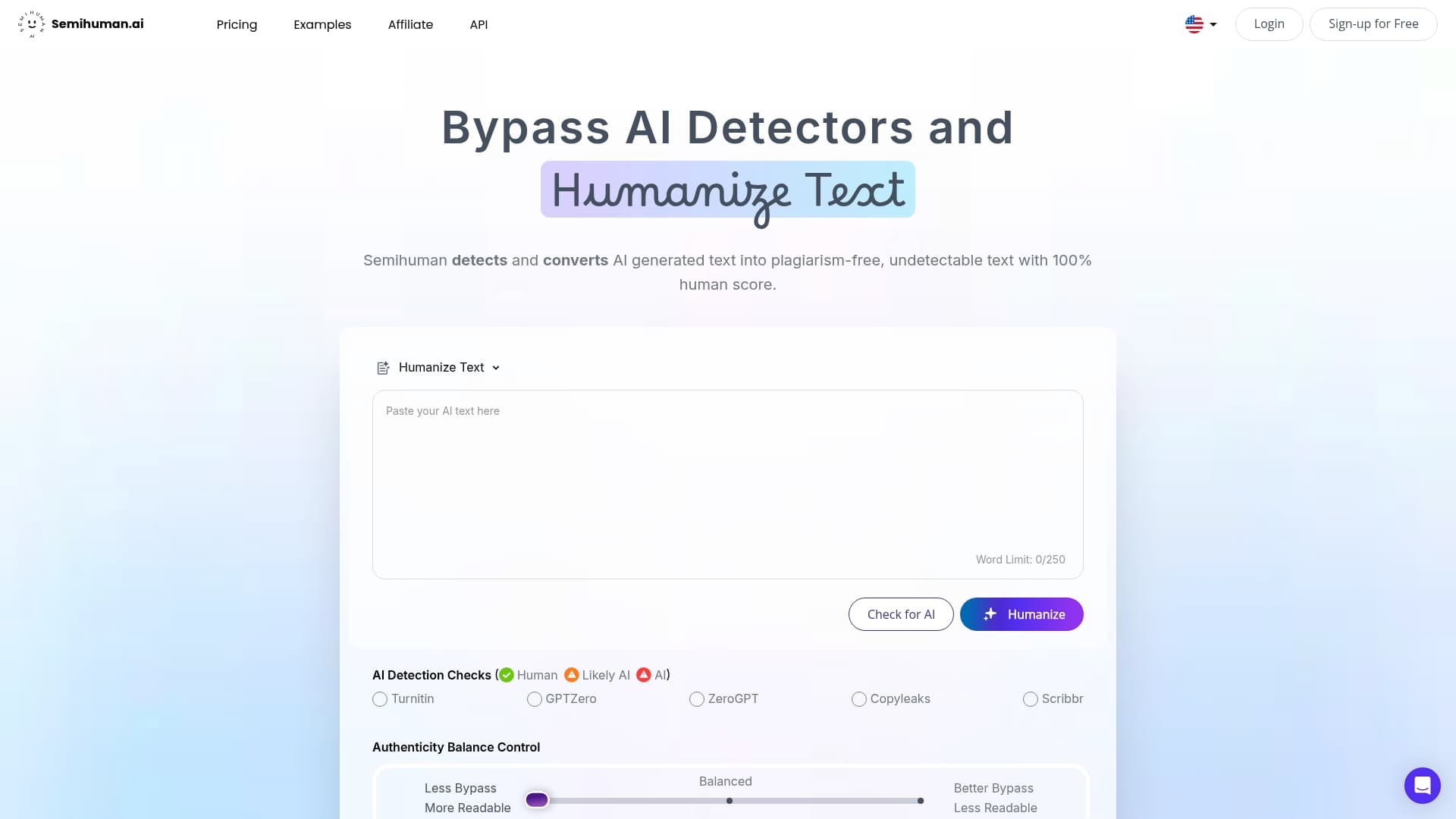
Drop a rough draft into the SEO text generator during your editing stage, once your outline and research are locked, and let it handle the restructuring and keyword integration while you focus on the specifics only you can add: real examples, real numbers, real experience. If detection resilience matters for your workflow, whether for academic compliance or platform policy reasons, the AI detector bypass tool handles that layer separately. Either way, the next step is simple: paste in a draft and see what comes back before your next deadline.
A handful of sources are worth bookmarking if you want to go deeper on any stage covered here:



Start
Humanizing
for Free!
Humanize