
Loading...

TL;DR:
- Brand voice is essential for differentiation in the AI era because it builds emotional connection and brand recognition.
- Operationally embedding voice into AI prompts and workflows ensures consistency, scale, and authenticity across content.
Brand voice is the consistent personality, tone, and emotional character a brand expresses across every piece of content it produces. Understanding why brand voice matters in the AI era is not optional for marketers. AI tools now generate content at a scale that was unimaginable five years ago, and the result is a flood of competent but indistinguishable writing. Brands that have invested in a clear, opinionated voice cut through that noise. Brands that have not find their content buried in a sea of outputs that all sound the same. The stakes are high, and the window to act is narrowing.
The most significant shift AI brings to content marketing is not speed. It is uniformity. AI tools create a leveling effect on content quality, producing audience fatigue and what researchers call "content immunity" to generic outputs. That means readers stop engaging with content that sounds like every other brand in their feed.
Distinct brand voice is now the last reliable moat for differentiation. When every company can generate a polished 1,000-word blog post in 30 seconds, the writing quality itself stops being a competitive advantage. What remains is personality, perspective, and a specific worldview that readers recognize and return to.
AI-mediated search compounds this problem. AI summaries reduce click-throughs to external links, which means your brand must register in a reader's memory before they ever visit your site. Voice becomes what researchers call "memory engineering," embedding consistent linguistic cues so that your brand stays recognizable even inside an AI-generated snippet.
Pro Tip: Audit your last 10 published pieces and ask: if you removed the logo, would a reader know this was your brand? If the answer is no, your voice is not doing its job.

The brands winning in AI-driven discovery share one trait. They sound like a specific, opinionated human rather than a corporate committee. That specificity is not accidental. It is the result of deliberate voice documentation and consistent enforcement across every content channel.
Brand voice is not a soft, creative concern. It is a revenue driver with measurable consequences.
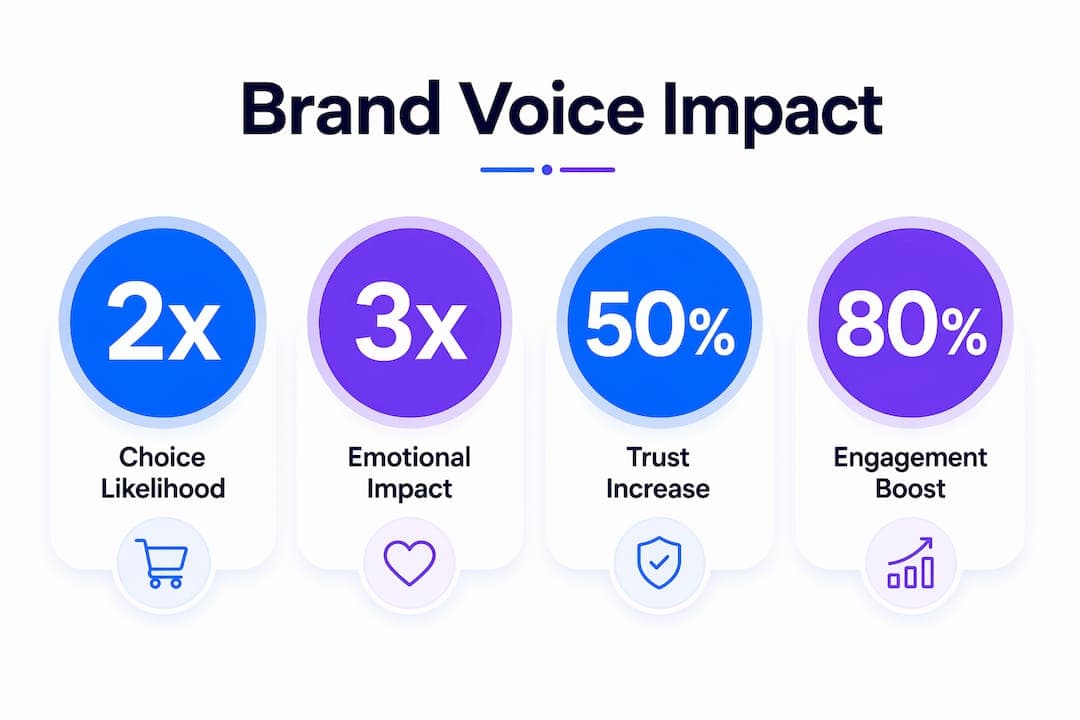
Brands with distinct emotional resonance are roughly twice as likely to be chosen over competitors in crowded B2B markets. B2B buyers consult more than 62 touchpoints before purchasing. Emotional connection shortens that sales cycle and increases willingness to pay a premium price.
The table below contrasts two approaches to brand communication and their typical outcomes.
| Approach | Characteristics | Typical outcome |
|---|---|---|
| Rational, feature-led voice | Jargon-heavy, benefit-focused, generic tone | Longer sales cycles, price-driven decisions |
| Opinionated, emotional voice | Specific worldview, human tone, consistent personality | Shorter sales cycles, premium pricing, stronger recall |
"B2B emotional advertising drives more long-term growth than rational campaigns. Buyers remember how a brand made them feel long after they forget the feature list." — LinkedIn B2B Institute research summary
Companies treating brand voice as mere professionalism often fail to build emotional trust. Jargon signals competence but not connection. Opinionated, human voices build the kind of trust that survives a competitor's lower price or a shinier product launch.
A defined tone of voice shapes how messages are received and influences engagement success. It also aligns words with visuals, creating a unified brand experience that readers recognize across formats and channels.
Brand voice fails when it lives only in a PDF that no one reads. Brand voice should be treated as operational infrastructure embedded directly into prompt engineering and editorial workflows. That shift from inspiration to execution is where most marketing teams fall short.
Here is a practical framework for embedding voice into AI content production.
Pro Tip: Build a one-page "voice cheat sheet" with three columns: phrases we use, phrases we avoid, and examples of our voice done right. Paste it into every AI prompt session.
AI does not create brand voice. It amplifies whatever already exists. A weak voice becomes hollow at scale. A strong voice becomes unmistakable. The operational work you do before you write a single prompt determines which outcome you get.
Authenticity is not a feeling. It is a set of repeatable practices that keep your voice consistent as content volume grows.
Effective brand voice strategies at scale share several characteristics:
Building brand identity with AI requires one non-negotiable commitment. Human oversight must remain in the loop. AI handles volume. Humans protect character. The importance of brand voice grows precisely because AI makes it easy to produce content without it.
A consistent, opinionated brand voice is operational infrastructure in the AI era, not a style preference, and brands that embed it into AI workflows will outperform those that treat it as decoration.
| Point | Details |
|---|---|
| Voice is a revenue driver | Brands with emotional resonance are roughly twice as likely to be chosen in B2B markets. |
| AI amplifies, not creates | Weak voices become hollow at scale; strong voices become unmistakable across all AI outputs. |
| Operational embedding is required | Voice constraints must live inside AI prompts and editorial workflows, not in a PDF no one reads. |
| Memory engineering wins discovery | Consistent linguistic cues secure brand recall in AI-summarized search results before clicks happen. |
| Authenticity needs a system | Quarterly voice audits and cross-functional alignment prevent drift as content volume grows. |
Most brands treat voice as a cosmetic layer. They write a two-page style guide, pick three adjectives like "bold, human, and approachable," and call it done. Then they hand that guide to an AI tool and wonder why everything still sounds generic.
What I have seen repeatedly is that AI does not hide weak brand work. It exposes it. When you scale content production, every gap in your voice documentation becomes a gap in your published output. The inconsistencies multiply. The personality flattens. Readers notice, even if they cannot articulate why.
The brands that get this right treat voice as infrastructure, the same way they treat their CRM or their editorial calendar. They document it with the same rigor they apply to a product spec. They test it, measure it, and update it. They balance authenticity with AI tools rather than choosing one over the other.
The uncomfortable truth is that most marketing teams are not ready for this. They are still thinking about voice as a creative exercise rather than an operational one. The brands that make that shift now will have a compounding advantage as AI-generated content continues to flood every channel. The ones that wait will spend years trying to recover a personality they never properly built.
— Tilen
Maintaining a distinct brand voice across hundreds of AI-generated pieces is a real production challenge. Semihuman is built to address exactly that.
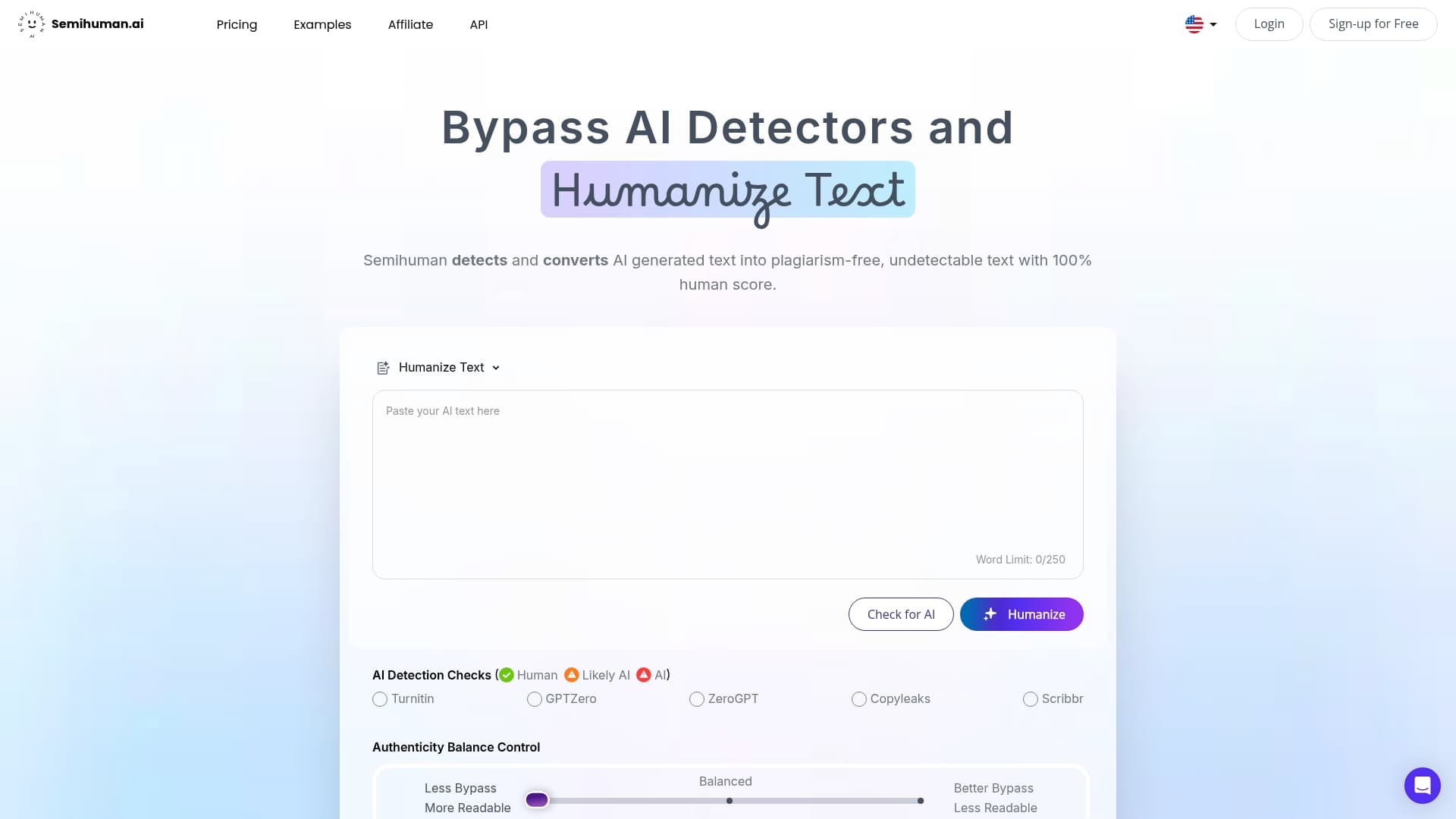
Semihuman's SEO text generator produces content that carries your brand's tone rather than defaulting to generic AI phrasing. The platform restructures AI output to sound genuinely human while preserving the keyword integration your SEO strategy requires. For teams managing high content volume, Semihuman's AI proof writing service adds an editorial layer that checks alignment with your documented voice before content goes live. The result is content that scales without losing the personality your audience recognizes.
Brand voice is the consistent personality and tone a brand uses across all content. It matters because emotional resonance built through a consistent voice roughly doubles the likelihood of being chosen over competitors in B2B markets.
AI amplifies whatever voice already exists in your content. A weak, undocumented voice produces hollow, generic outputs at scale, while a well-documented voice becomes more recognizable across every AI-generated piece.
Embed voice constraints directly into AI prompt templates, feed the AI your best legacy content as examples, and define explicit voice failures so teams know what "close enough" looks like and reject it.
AI search summaries reduce click-throughs to external sites, so brand recall must happen before a reader visits your page. Consistent linguistic cues and signature phrases act as memory engineering inside AI-generated snippets.
Run a formal brand voice audit at least quarterly. Strip branding from recent content, have neutral readers describe the personality they detect, and compare that description to your documented voice to measure drift.



Start
Humanizing
for Free!
Humanize