
Loading...

TL;DR:
- Using different comment types aligned with pedagogical principles helps transform AI drafts into authentic, human-like writing.
- Prioritizing formative, right-cure feedback during drafting encourages meaningful revisions and skill development.
Use interpretive and descriptive feedback for voice and audience alignment; use directive and corrective feedback for grammar and clarity. Those two rules cover most of what writers and tutors need when converting AI-generated drafts into prose that reads as genuinely human.
The seven pedagogical comment types — directive, evaluative, advisory, interpretive, descriptive, Socratic directive questions, and open-ended discovery questions — form the canonical taxonomy. Pair them with formative timing (feedback during drafting, not just at the end) and a functional-quality filter, and you have a complete system for turning AI output into writing that passes both human and automated scrutiny.
Start here when humanizing AI prose:
Pro Tip: Before any humanization session, confirm your institution's AI-use policy. Penn State, Columbia University, and most U.S. universities now require disclosure when AI tools contributed to a draft. Semihuman supports compliant workflows, but disclosure is always the writer's responsibility.
Pedagogy research identifies seven distinct comment types, and each one pulls a different lever in the revision process.

Directive comments tell the writer exactly what to change. "Rewrite this sentence in active voice." They work well for clear mechanical errors but can short-circuit a writer's thinking if overused. Beginners and less experienced tutors reach for these most often.
Evaluative comments judge quality. "This argument is underdeveloped." Useful for signaling a problem, but they leave the writer guessing about the fix. Pair them with something more specific.
Advisory comments suggest without commanding. "You might try opening with the example before the claim." They preserve the writer's agency, which matters when the goal is authentic voice rather than tutor-dictated prose.
Interpretive comments are where experienced tutors spend most of their time. "It sounds like you're arguing X, but the evidence you cite supports Y instead." These surface the gap between what the writer intended and what landed on the page — exactly the gap AI text tends to create.
Descriptive comments describe what the text does without judging it. "Your first three paragraphs each begin with a definition." That observation alone often prompts revision without the writer feeling criticized.
Socratic directive questions push the writer to think. "What does your reader already know about this topic?" They work especially well for audience-alignment problems, which are common in AI-generated drafts.
Open-ended discovery questions go further. "What's the one thing you most want the reader to take away?" These are high-investment moves — they can unlock a writer's authentic voice when the draft feels hollow.
Pro Tip: In asynchronous or online tutoring, marginal comments handle sentence-level fixes best. Save your interpretive and open-ended questions for an end-comment or a follow-up session, where the writer can sit with them.
Formative feedback happens during drafting. Summative feedback evaluates a finished product. For humanizing AI text, formative wins every time — the writer can still revise.
Columbia University's guidance is direct: forward-looking feedback given while work is in progress produces better learning outcomes than backward-looking summative comments alone. That principle applies equally to AI-humanization work. A comment on a submitted final draft that says "this reads like a bot wrote it" helps no one.
The functional-quality filter is the other half of this. Not all feedback is worth acting on. A functional-quality classification breaks comments into:
Pro Tip: Convert an opinion comment into a testable revision step. If a reader says "this feels robotic," pick one paragraph, rewrite the opening sentence in your own spoken voice, then read both versions aloud. If yours sounds more natural, you've confirmed the problem and the fix simultaneously.
Analytic rubrics break writing into components and score each one separately. Holistic rubrics give a single overall judgment. For humanization work, analytic rubrics are more useful — they tell the writer exactly which dimension needs attention.
| Dimension | Exemplary | Acceptable | Needs Work |
|---|---|---|---|
| Voice and tone | Consistent, individual, and audience-aware throughout | Mostly consistent; occasional flat or generic passages | Sounds generic or AI-generated in most sections |
| Audience alignment | Every example and reference fits the reader's context | Some examples feel generic or mismatched | Little evidence of audience awareness |
| Argument clarity | Central claim is clear and supported at every turn | Claim present but support is uneven | Claim buried or absent |
| Mechanics | No errors that distract from meaning | Minor errors that don't impede reading | Errors frequent enough to undermine credibility |
A holistic rubric sample: "This draft reads as a competent overview but lacks the specific examples and tonal variation that would make it feel authored rather than assembled."
Using rubric scores to prioritize revisions:
Pro Tip: Neal Lerner's assessment research distinguishes between quantitative metrics (useful for institutional reporting) and qualitative evidence (better for improving actual instruction). Use your rubric scores to spot patterns across writers, not just to grade individual drafts.
Ethical feedback for AI-humanized writing has one non-negotiable rule: never help a writer misrepresent AI-generated content as entirely their own when the context requires disclosure. That line separates legitimate humanization support from academic fraud.
Forward-looking feedback that enables revision is the standard. Comments that help a writer develop their own voice are always appropriate. Comments that fabricate author experience, invent citations, or help disguise AI origin in a context that prohibits AI use are not.
Sample comments tutors can adapt:
Pro Tip: When giving feedback on AI-assisted drafts, focus on content originality and voice specificity — the two dimensions AI text most consistently fails. Generic claims and absent examples are the clearest signals.
Use this sequence every time you receive tutor comments on an AI-assisted draft.
Pro Tip: Keep a revision log. Note which tutor suggestions you acted on and what changed. This makes follow-up sessions faster and gives you evidence of your own progress — which matters when an instructor asks how you revised.
The practical question most writers face: when is it acceptable to use an AI tool to humanize a draft, and when does that cross into misrepresentation?
The answer depends entirely on context. Marketing content, internal reports, and personal blog posts carry no prohibition on AI assistance. Academic assignments, grant applications, and journalism often do.
Ethical checklist:
Disclosure examples by context:
Feedback loops that incorporate both AI tools and human review are increasingly standard in content engagement workflows. The key is keeping the human judgment visible and documented.
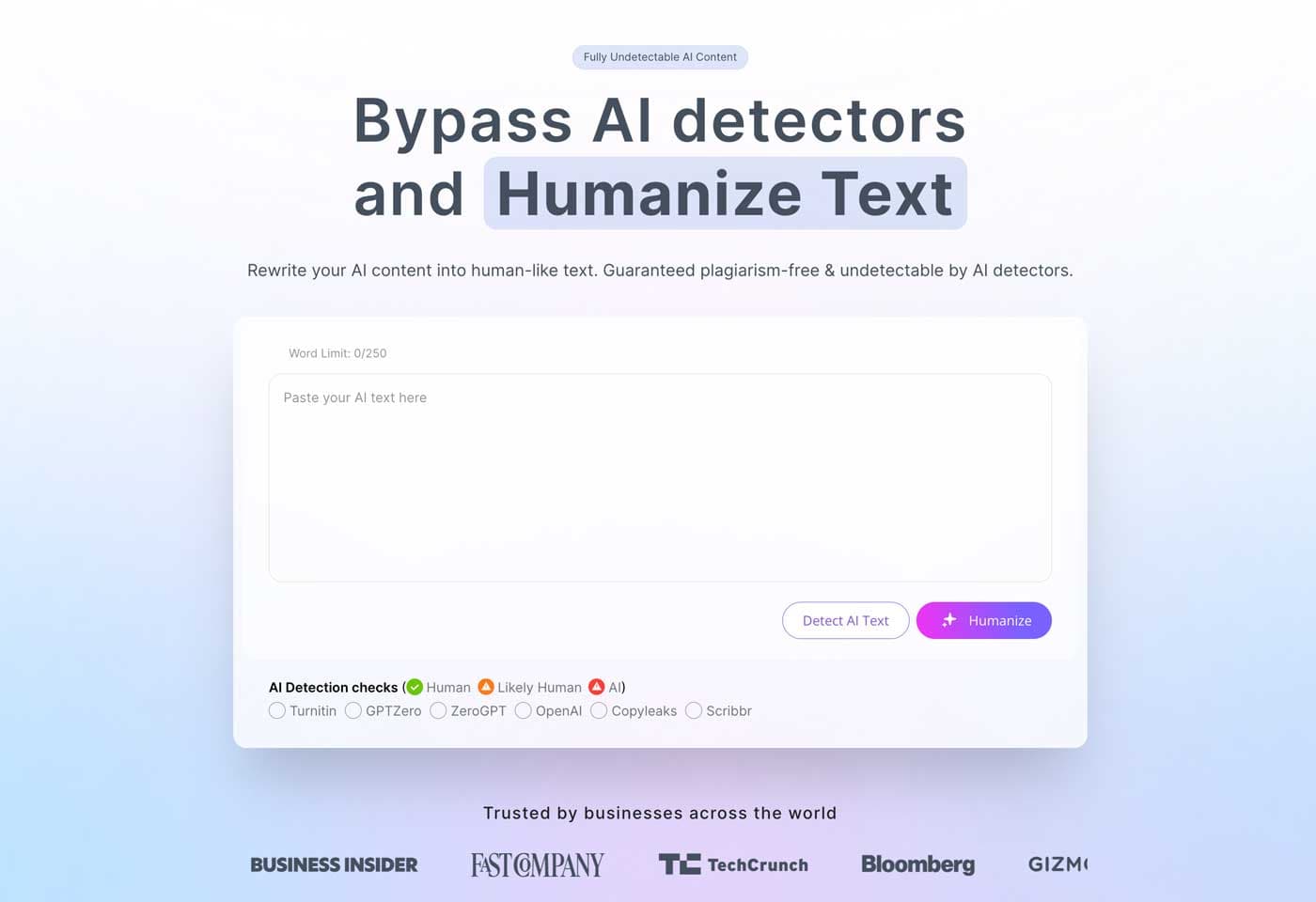
Semihuman is built for exactly the workflow this article describes: take an AI-generated draft, apply tutor-style feedback to identify voice and authenticity gaps, then use the platform to restructure and rewrite passages that still read as machine-generated.
What Semihuman does in practice:
The platform is a tool for compliant humanization, not a shortcut around disclosure requirements. Semihuman's position is straightforward: use the platform to improve your writing's authenticity, and follow your institution's or publisher's rules about what that process requires you to disclose.
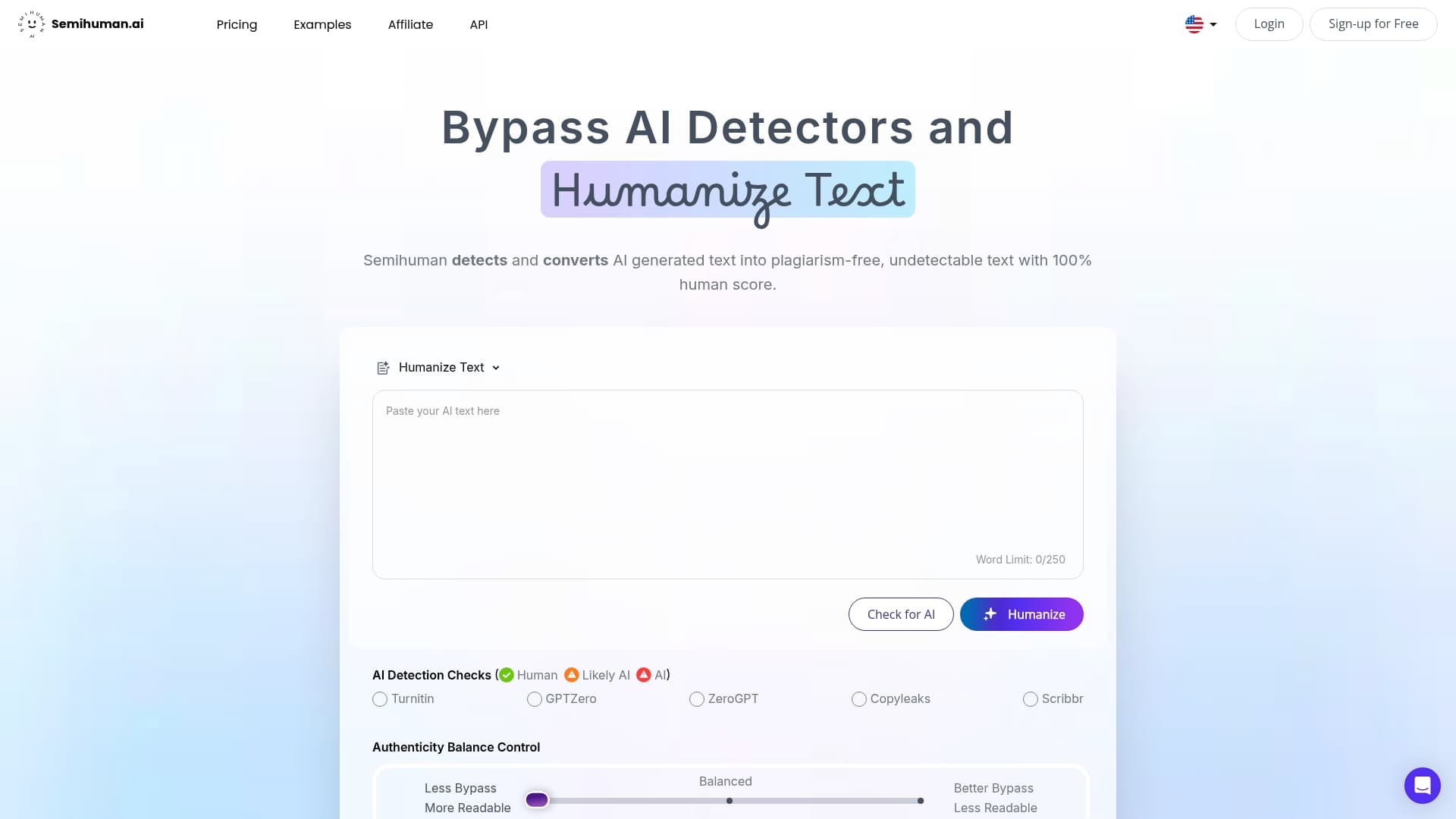
Writers working on academic content can bypass AI detectors while maintaining the voice edits their tutors recommended. For SEO-focused content, the SEO text generator combines humanization with keyword integration in a single pass.
Pro Tip: Run Semihuman after your manual voice revisions, not before. Human edits first, detection check second — that sequence produces more authentic results than letting the tool do all the work.
Interpretive and descriptive feedback, applied during drafting, are the most effective tools for humanizing AI text while preserving the writer's authentic voice.
| Point | Details |
|---|---|
| Prioritize interpretive feedback | Use it to surface gaps between intended and actual voice — the core problem in AI-generated drafts. |
| Apply formative timing | Give feedback during drafting so writers can act on it; summative comments after submission change nothing. |
| Use analytic rubrics | Score voice, audience alignment, argument, and mechanics separately to direct revision effort precisely. |
| Filter by functional quality | Act on right-cure comments first; treat opinion comments as hypotheses to test, not commands to follow. |
| Disclose AI use when required | Check institutional or publisher rules before submitting; document human edits in academic contexts. |
Most tutors default to directive and evaluative comments because they're fast to write. "Fix this." "This is weak." The problem is that neither type teaches the writer anything transferable. They fix the draft; they don't build the writer.
Interpretive and descriptive feedback take longer to write, but they're the ones that show up in the next draft without prompting. When a writer understands why a passage sounds generic — not just that it does — they start catching it themselves. That's the difference between a writer who needs a tutor every time and one who eventually doesn't. For AI-assisted writing specifically, that self-awareness is what separates compliant, authentic humanization from dependency on a tool to do the thinking. Repeated, rubric-guided sessions build that awareness faster than any single round of edits. The feedback type matters less than whether the writer leaves the session knowing something they didn't before.



Start
Humanizing
for Free!
Humanize