
Loading...

Give feedback that names the exact passage, ties it to a specific criterion, explains the reader or business impact, and requests a direction for revision rather than a rewrite. Check audience fit, evidence, and structure before touching word choice. Use automated tools for the first pass, but reserve the final call on meaning and voice for a human reviewer as recommended in this Content Gap Analysis: A Practical Guide.
TL;DR:
- Supporting details emphasize the importance of citing sources for claims and comparisons to maintain credibility and avoid unsupported assertions.
- The framework recommends addressing structural issues early, such as leading with recommendations before background to improve clarity and relevance.
- Prioritizing structural and evidence-related feedback over stylistic polishing saves time and ensures core issues are fixed first.
- Organizing feedback with specific criteria and clear directions fosters better writer understanding and more effective revisions.
- Delivering feedback at the right stage, before extensive editing, minimizes rework and improves overall draft quality.
Before you mark up a single sentence, run the draft through a fast triage. This takes a minute or two and catches the issues that matter most before you waste time polishing prose that might get restructured anyway.
For anything you flag, note the exact passage, a priority level (high, medium, low), and the direction you want the revision to take. That last step is what separates feedback from complaint: it gives the writer something to act on.
A comment is only useful if another person, or the original author, can read it and know exactly what to do next. The Peer + AI Feedback model from UC Davis recommends a structure that works whether a human or an AI tool generated the draft: locate the issue, rate its priority, describe the problem, explain the impact, cite evidence, suggest a direction, and leave room for verification.
A structural example: "Paragraph 3 buries the main recommendation under three paragraphs of background. Priority: high. Readers searching for a direct answer will bounce before reaching it. Move the recommendation to the opening and compress the background into a single sentence."
A factual example: "The claim that 'most readers skim headlines' has no source. Priority: medium. Without support, this reads as an assumption and could undermine the article's credibility. Link a study or remove the claim."
Pro Tip: Keep each comment focused on one problem. A comment that bundles three issues forces the writer to untangle your reasoning before they can act on it.
Run automated checks early, while the draft is still rough. Tools can flag grammar, awkward phrasing, structural gaps, and repetitive keyword patterns faster than a person can read the piece twice. UMGC's guidance on reviewing AI-assisted writing treats this automated pass as the first filter, not the final word: meaning, cultural nuance, and ethical judgment still need a person.
Strip personally identifying information from a draft before sending it to any external system, and check your organization's AI policy first. UNESCO's 2023 guidance found that most institutions surveyed had no formal policy on generative AI at the time, which means permission is often assumed rather than confirmed.
A draft can read smoothly and still fail the reader. Google Search Central's guidance on AI-generated content is direct on this point: how a piece was written is not the quality signal, whether it serves the reader is. Run this checklist before you sign off on anything built for search traffic.
Decide early whether the piece needs a disclosure that AI tools were involved in drafting, and if so, where that note belongs. That call depends on your publication's policy and the reader's expectations, not on whether the draft passes a detector.
These snippets show the template in action. Notice that none of them rewrite the sentence for the author, they point at the problem and name a direction.
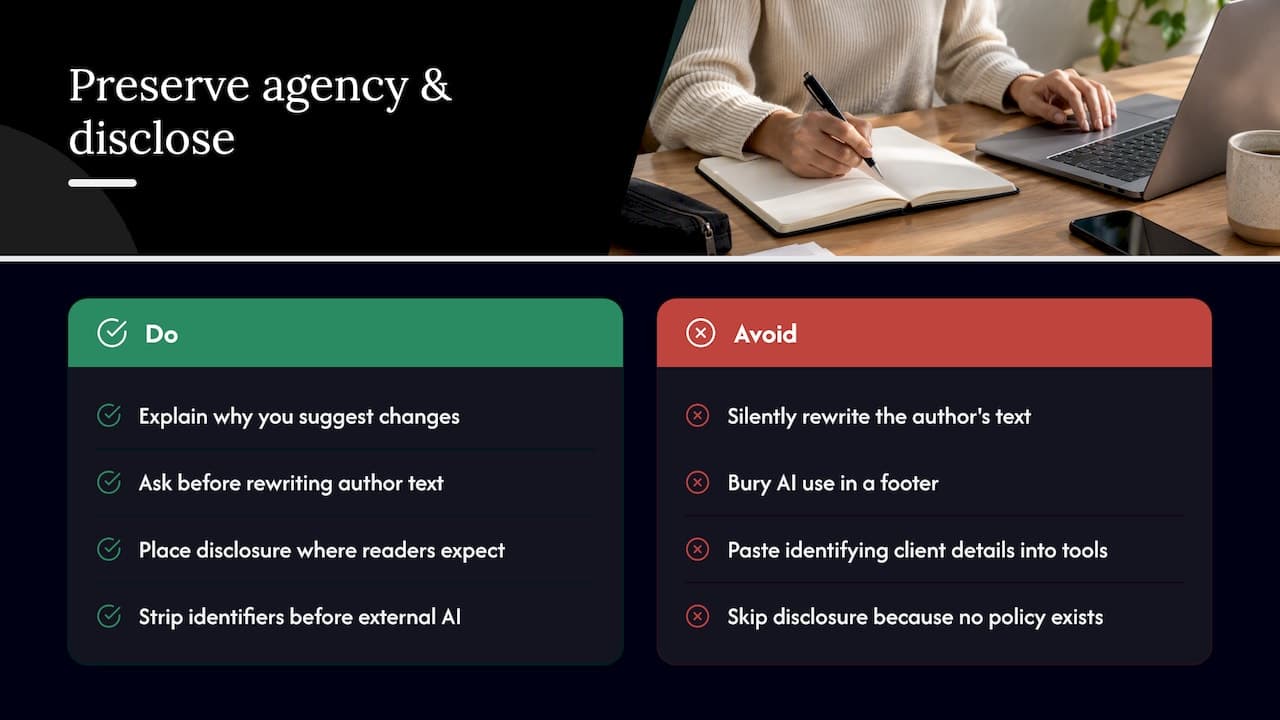
Feedback should leave the decision with the writer. A comment that says "this paragraph doesn't support the thesis, consider cutting it" respects the author's judgment; a comment that silently rewrites the paragraph does not, even when the rewrite is better. UNESCO's human-centered framing applies directly here: the organization's 2023 call for stronger oversight treats AI as a tool that assists judgment, not one that replaces it.
This matters practically, not just ethically. A writer who understands why a change was requested can apply that reasoning to the next draft. One who only receives a rewritten paragraph learns nothing and will likely repeat the same issue.
Disclosure is a separate question from authorship. Some publications require a note when AI tools contributed to drafting or editing; others do not. Where a disclosure is warranted, place it where a reader would reasonably expect it, typically near the byline or in an editorial note, rather than buried in a footer. If your organization has no stated policy, treat that as a prompt to ask rather than a reason to skip the disclosure altogether.
The same caution applies to what you send outside your organization. Before pasting a draft into an external AI tool for feedback, strip names, client details, or anything else that identifies a real person or business. Keep a short record of what was submitted and why, so the decision can be reviewed later if needed.
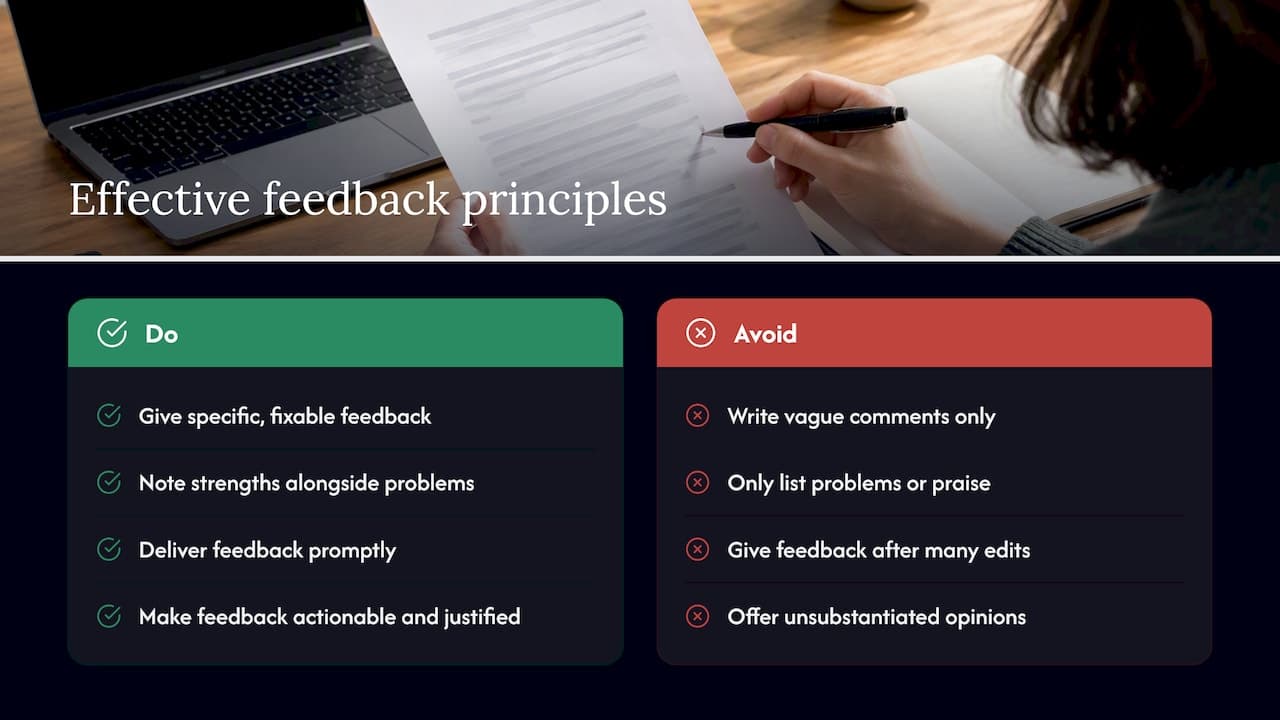
Specific feedback beats general feedback every time. "This section is confusing" tells a writer nothing; "the second paragraph introduces a new term without defining it, which breaks the flow for a reader seeing it for the first time" gives them something to fix.
Balance matters too, not as a cushioning technique but as an accuracy check. A draft rarely fails completely or succeeds completely, so feedback that only lists problems misrepresents the piece as badly as feedback that only praises it. Note what the draft does well, specifically, alongside what needs work. If the structure is strong but the evidence is thin, say both.
Feedback should also be timely relative to the next step in the process. A comment that arrives after a piece has already gone through three more rounds of edits is harder to act on than one delivered while the draft is still open and fresh in the writer's mind.
Finally, feedback should be actionable. If a reviewer cannot point to what should change and why, the comment is an opinion, not feedback. The iRULER research from Stanford found that feedback anchored to explicit criteria and justified with reasoning produced more useful revision guidance than generic commentary, a distinction that applies whether the reviewer is a person or an AI system.
How a comment is phrased affects whether it gets acted on. Framing feedback around your own reaction as a reader, rather than a flat judgment of the writer's skill, tends to land better: "I lost track of the argument here" invites a conversation, while "this is poorly organized" invites defensiveness. The content is similar, but one leaves room for the writer to ask what specifically broke down.
In written review tools, the equivalent of nonverbal cues is formatting and tone. A comment in all caps or heavy with exclamation points reads as urgency or frustration even when that is not the intent. Keep comments at a steady, neutral register, and reserve emphasis for genuinely high-priority items.
Ask questions where you are uncertain rather than stating assumptions as fact. "Was this stat pulled from a specific report?" opens a conversation; "this stat is made up" closes one, even if your suspicion turns out to be correct.
Sequence matters in longer reviews. Leading with a genuine strength before moving into the issues does not soften bad news, it sets context so the writer reads the rest of the feedback as calibration rather than rejection.
Writers resist feedback for reasons that usually have nothing to do with the quality of the comment. Vague criticism triggers defensiveness because there is nothing concrete to respond to, which is one more reason specificity matters. A pile of comments delivered all at once, with no priority order, can feel like an attack even when every individual note is fair.
Volume is a real problem with AI-assisted drafts specifically. Because these drafts often need structural and evidentiary fixes alongside line edits, reviewers can generate twenty or thirty comments on a single piece. Group related comments, prioritize by impact, and consider delivering high-priority structural feedback in one pass and lower-priority line notes in a second pass once the structure is settled.
Resistance also builds when feedback arrives without context on the why. A comment that explains the reader or business impact of an issue, as the template above requires, gives the writer a reason to care about the fix rather than just an instruction to follow. When a writer still pushes back on a specific note, that is often a sign the comment was unclear rather than that the writer is being difficult, worth revisiting before assuming the worst.
Feedback lands best when it arrives at a point in the process where the writer can still act on it without redoing finished work. Flagging a structural problem after the draft has already gone through copyediting wastes the copyediting pass; flagging it before any line editing begins saves everyone time.
For AI-generated drafts specifically, this means running structural and factual review before stylistic polish, every time. A sentence that reads beautifully in a paragraph that gets cut later was never worth polishing.
Setting matters less in written review than in live conversation, but the equivalent consideration is the platform. Comments left directly on the document, next to the passage they reference, get acted on more reliably than feedback delivered separately in a chat message or email, where the writer has to hold the context in their head while switching between windows.
If a piece needs several rounds of review, space them out enough that the writer has time to actually revise between rounds, rather than receiving a new batch of comments before addressing the last one.
Not every writer responds to the same framing. Some want the bottom line first and the reasoning after; others want the reasoning laid out before the conclusion, so they can follow how you arrived at the note. If you work with a writer regularly, pay attention to which order they respond to better and adjust.
Cultural norms around directness vary, and a comment style that reads as appropriately blunt in one context can read as harsh in another. Where you are reviewing work from a writer whose communication norms differ from your own, lean toward the template's structure: location, problem, impact, evidence, direction. That structure carries the information without relying on tone to do the work, which makes it more portable across different communication styles.
When in doubt, ask how someone prefers to receive feedback rather than assuming. A short conversation about format, before the review cycle starts, often prevents more friction than any amount of careful wording during the review itself.
Rubric-anchored feedback consistently outperforms generic notes. The clearest improvement comes from pairing a specific criterion, like evidence or structure, with a quoted passage and a direction. Writers can act on that immediately, while "make this better" produces another draft that misses the same issue.
The most common reviewer mistake is editing line by line before checking structure. A perfectly polished sentence sitting in the wrong place is still wasted effort. Fix organization and evidence gaps first, flag tone and phrasing for a second pass.
The habit that saves the most time: deciding within the first read whether an issue is high priority or can wait. Not everything needs a comment now.
— Tilen
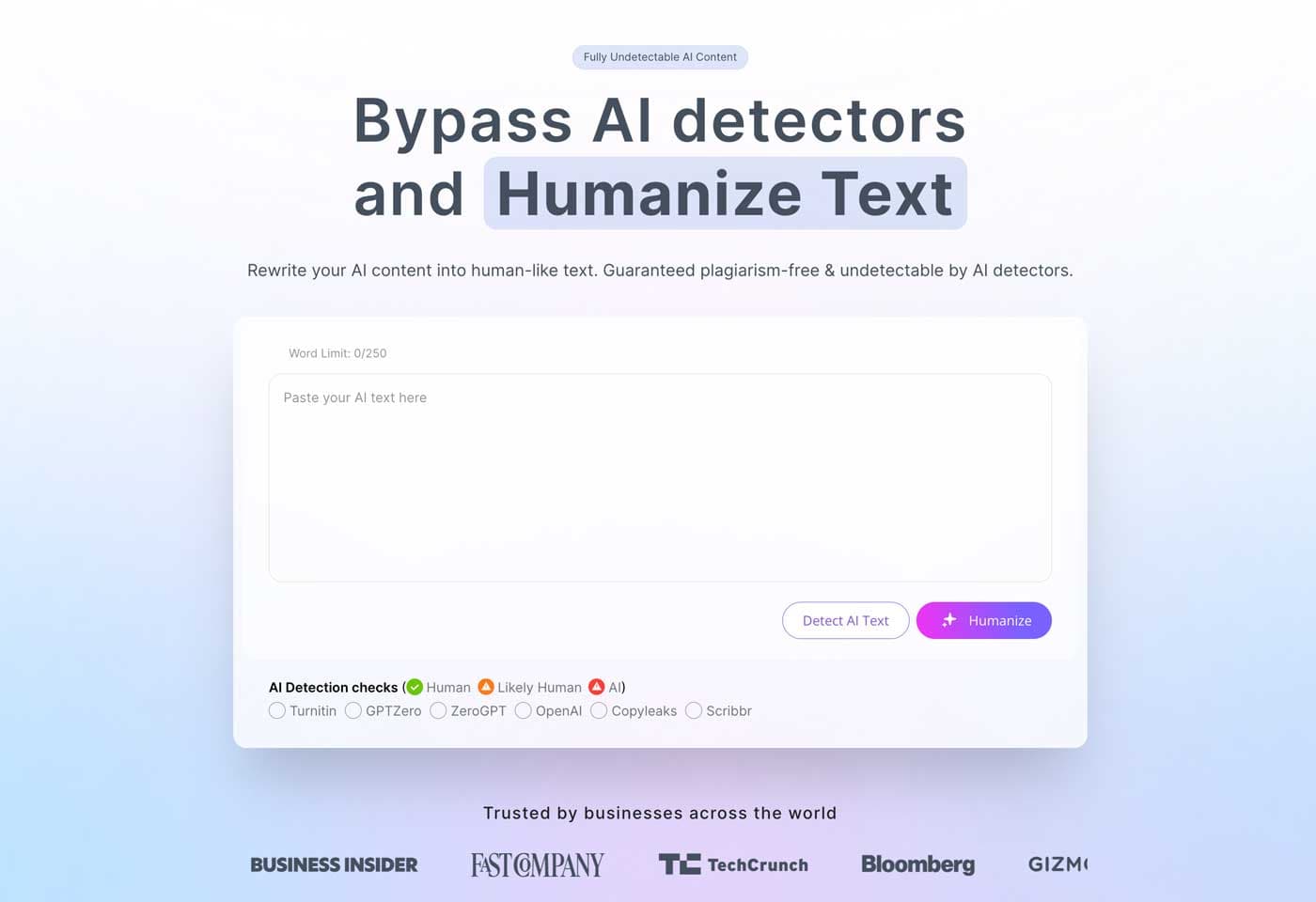
Semihuman offers a practical shortcut for the automated stage of this workflow, not a replacement for it. Once your structural and evidence feedback has shaped a revision, Semihuman's restructuring and keyword integration features can help smooth the resulting draft so it reads naturally and holds up against detection-aware checks, without requiring a full manual rewrite of every sentence.
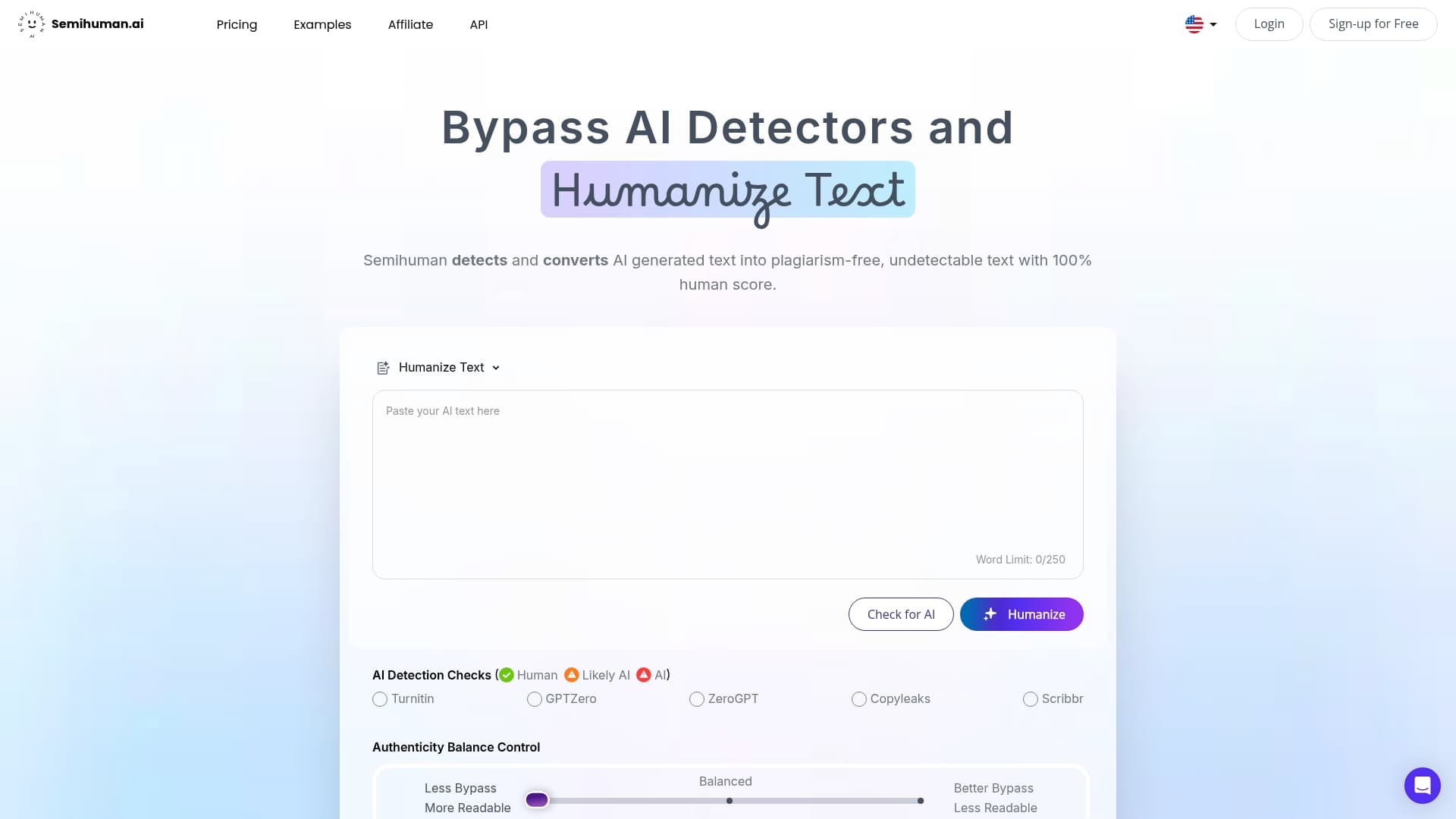
That speed only applies to the mechanical layer. Decisions about voice, accuracy, and whether a claim needs a source still belong to a human reviewer, and Semihuman does not change that division of labor. If you want to try the humanization and restructuring tools directly, the Free, Basic, and Pro plans are available for individual use, and the Developer, Business, and Enterprise API plans suit teams that want to build this step into a larger publishing pipeline.
Quote the exact passage, name the problem using a specific criterion like clarity or evidence, and suggest a direction for the fix rather than new wording. This keeps the decision with the original writer while still giving them something concrete to act on.
Use automated tools early for grammar, structure, and style checks on a rough draft, since they catch mechanical issues quickly. Save human review for anything touching meaning, voice, factual accuracy, or publishing risk, which is where the PAIRR model from UC Davis places the human reviewer's judgment.
A useful rubric covers audience fit, evidence and sourcing, structural logic, voice consistency, and natural keyword use rather than raw detector scores. The iRULER research from Stanford found that rubric-based, justified feedback produced more useful guidance than open-ended commentary.
That depends on your organization's policy and reader expectations, since practices vary by publication. Where a disclosure applies, place it near the byline or in an editorial note so readers see it without it disrupting the content itself.
Lead with a specific strength before raising issues, and frame problems around your own reaction as a reader rather than a judgment of their skill. Group related comments and prioritize them, since a long list delivered without structure reads as overwhelming even when each note is fair.



Start
Humanizing
for Free!
Humanize