
Loading...

Yes: data-driven, privacy-first personalization reliably increases customer engagement and can lift revenue by low-double-digit percentages when it runs on first-party data, real decisioning logic, and visible privacy controls. The mechanism is simple: relevant messages sent at the right moment, backed by permission the customer actually gave, earn more attention and more trust than generic blasts ever will.
TL;DR:
- Personalization based on first-party data, decisioning, and privacy controls typically yields a 10 to 15% revenue lift, especially when executed at scale.
- Effective personalization requires a consolidated customer data platform, real-time decisioning, modular templates, and measurement to work properly.
- Trigger-based tactics like cart abandonment and renewal reminders deliver higher engagement than targeting microsegments prematurely.
- Proper privacy management with clear explanations and preference controls significantly improves customer trust and willingness to share data.
- Using holdout groups for incremental testing helps accurately gauge personalization’s true impact rather than relying solely on standard A/B tests.
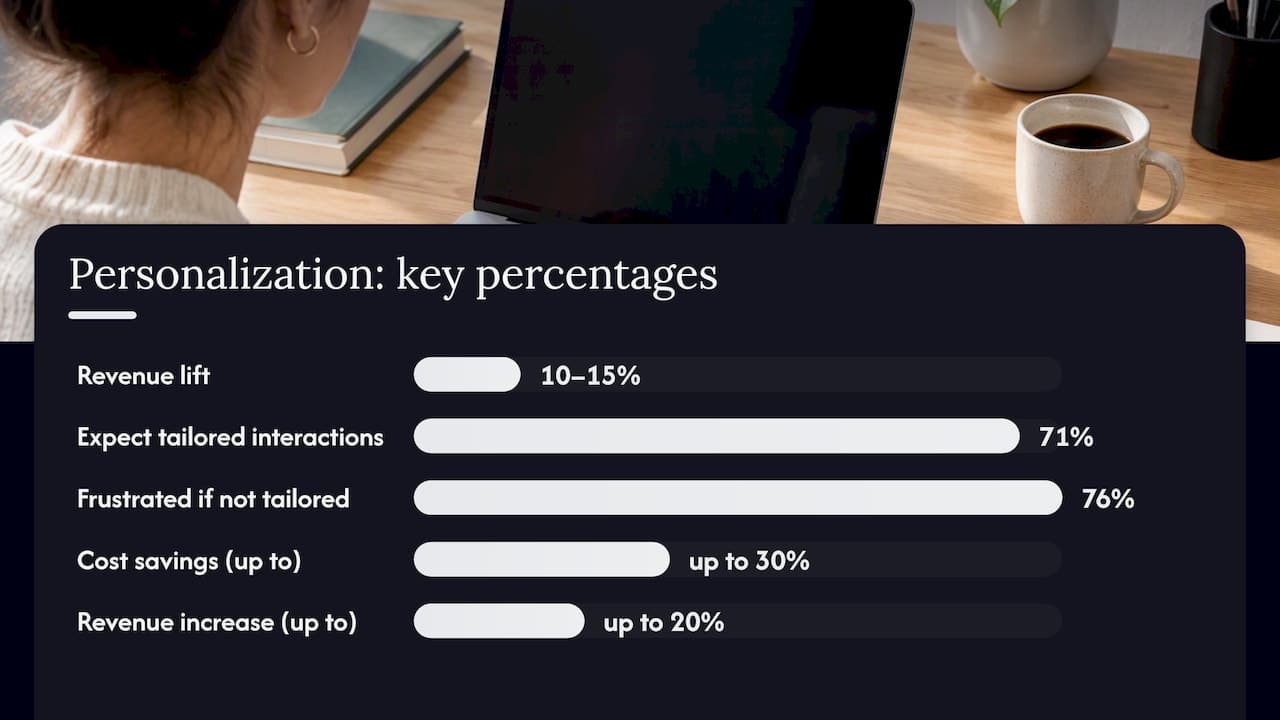
Marketing teams do not need to take this on faith. Companies that excel at personalization often generate a 10 to 15% lift in revenue, with individual company results ranging more widely depending on category and starting maturity. The same research found that 71% of consumers now expect tailored interactions, and 76% get frustrated when a brand fails to deliver one.
That expectation gap shows up directly in performance metrics: click-through rates, open rates, conversion rates, and repeat purchase rates all respond to relevance. A shopper who sees products tied to what they already browsed converts more often than one served a generic homepage. A subscriber who gets a renewal reminder timed to their actual usage pattern renews more often than one who gets the same email as everyone else on the list.
Integrating first-party data sources can produce cost savings of up to 30% and revenue increases of up to 20% by letting brands act on key moments instead of guessing, according to BCG's analysis for Think with Google. The pattern across this research points to three forces doing the work:
Academic work on causal inference and treatment-effect modeling, summarized in Harvard Business School's overview of personalization methods, reinforces a harder point: measuring the actual effect of a personalized offer, not just its correlation with a sale, is what separates a real program from a guess.
Personalization fails most often not from bad creative but from missing plumbing. Before a brand can credibly promise relevance, four things need to exist.
McKinsey's research on scaling personalized marketing notes that leading organizations treat this as infrastructure, running large volumes of tests a year once the foundation is built, rather than treating personalization as a campaign-by-campaign effort.
Pro Tip: Audit your identity resolution before you touch creative: a decisioning engine fed by duplicate or conflicting profiles will confidently personalize to the wrong person.
Not every tactic deserves equal investment. Here is a practical order of operations, roughly matched to effort and payoff.
The common thread across all five steps: each one needs a cleaner signal than the last, and skipping a step tends to produce personalization that looks sophisticated but performs no better than a well-built segment list.
Pro Tip: Cap the number of active microsegments you run at once. Teams that split audiences too finely often end up with segments too small to test reliably.
Customers are more willing to share data and respond to personalization when they feel in control of it, not less. Google's Three Ms framework, Meaningful, Memorable, Manageable, gives marketers a concrete way to build that feeling instead of just complying with it.
Users who feel high control over their data are three times more likely to react positively to advertising and twice as likely to find it relevant, with positive privacy experiences linked to an 11 to 16% uplift in brand trust. Personalization that feels mysterious reads as invasive; personalization that explains itself reads as helpful, even when the underlying data use is similar.
These controls also feed back into measurement. Consent-aware modeling, segmenting and scoring only on data customers have actively agreed to share, keeps your decisioning engine compliant and keeps the trust loop intact rather than treating privacy as a one-time legal checkbox.
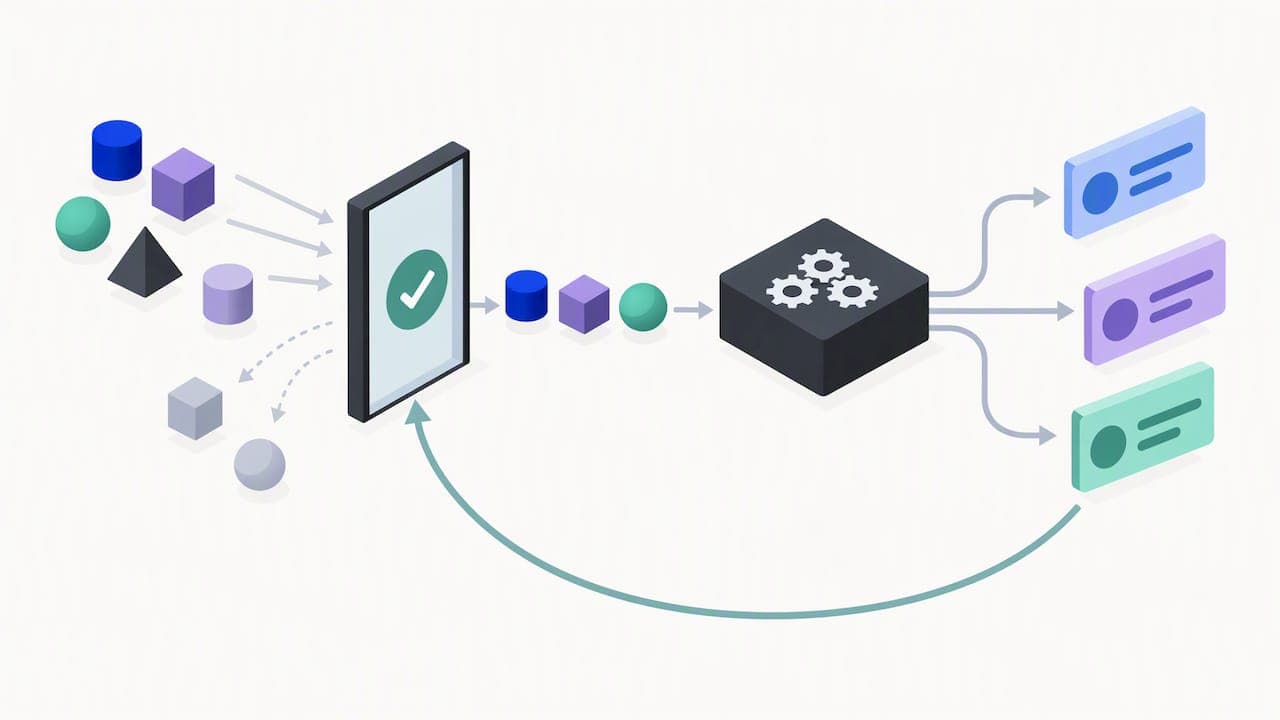
Standard A/B tests answer "did version B outperform version A." They do not answer "would this customer has converted anyway." For that, you need incrementality or holdout testing: a group that receives no personalized treatment at all, measured against the treated group over the same period.
Pro Tip: Run your holdout group for at least one full purchase cycle before drawing conclusions. A two-week holdout on a 45-day buying cycle will tell you almost nothing.
A pilot proves value before you ask for a bigger budget. Keep it tight and timeboxed.
A hub-and-spoke team model works well here: a central team owns the data layer, decisioning rules, and measurement, while channel owners (email, on-site, app) own the creative and channel-specific execution. That split keeps the pilot fast without losing central oversight of what is actually being tested.
Decisioning engines can choose the right message for the right customer, but the message still has to read like it was written for a person, not assembled by a template. This is where AI-assisted copy at scale tends to break down: dynamic email subject lines, on-site microcopy, and personalized snippets generated in bulk often carry the stiff, repetitive tells of machine-written text, which undercuts the trust personalization is supposed to build.
There are tools available that take AI-generated text and restructure it to read naturally, while integrating target keywords for SEO and reducing the chance it gets flagged by detectors like Turnitin, GPTZero, or Copyleaks. For teams generating hundreds of personalized subject lines or dynamic snippets a week, running that copy through a humanization pass before it ships helps keep tone consistent and genuinely readable, rather than let a decisioning engine ship text that sounds like no one wrote it.
Retail e-commerce remains the clearest case: product recommendations and cart-abandonment triggers tied to browse history consistently outperform generic promotional email, since the signal (what someone just looked at) maps directly to the offer.
Subscription and media businesses lean on renewal-timing and content-affinity personalization, surfacing recommendations based on what a subscriber has already consumed rather than what is simply new.
Financial services use lifecycle-stage personalization carefully, tailoring product messaging (a first credit card, a mortgage inquiry) to where a customer sits in a long relationship, with privacy framing doing extra work given the sensitivity of the data involved.
Travel and hospitality brands personalize around timing more than content, triggering offers around past booking windows and loyalty-tier status rather than granular behavioral tracking, since booking frequency is naturally lower than retail purchase frequency.
Across all four, the strongest results come from pairing a clear trigger (a real behavioral or lifecycle signal) with a message built to explain itself, not from adding more data points for their own sake.
Over-personalizing is the most common failure. Teams that chase microsegments before their data and measurement are ready end up with dozens of small audiences, none large enough to test reliably, and creative production costs that outpace any measurable lift.
Ignoring consent is the second. Building decisioning models on data customers never explicitly agreed to use creates both a compliance risk and a trust problem the moment a customer notices how much a brand seems to know.
Poor measurement discipline is the third and most expensive. Teams that rely on standard A/B results alone, without a holdout group, routinely overstate the value of personalization because they are measuring correlation with intent, not the actual effect of the message.
A fourth, quieter problem is content fatigue: even well-targeted messages lose effectiveness if the underlying copy is repetitive or clearly templated, which is why creative quality and personalization logic need to improve together, not in sequence.
Generative AI is moving from a creative shortcut to an engagement function. McKinsey's reporting on genAI-enabled personalization points to early pilots improving engagement by roughly 10% when scaled copy and tone variation are paired with measurement guardrails, a pattern likely to extend into imagery and video as tools mature.
Decisioning is also getting faster. Organizations that consolidate first-party data and build real decisioning engines are starting to treat personalization as an always-on capability, running continuous tests rather than quarterly campaigns, a shift BCG frames as a competitive moat built on faster pipelines and faster activation.
Privacy infrastructure is converging with personalization infrastructure rather than sitting apart from it. Consent-aware modeling, where only explicitly shared data feeds the decisioning engine, is becoming the default architecture rather than a compliance add-on, which should make the trust gains from the Three Ms easier to sustain as programs scale.
Expect the next wave of tools to blur the line between customization (what a user sets manually) and personalization (what a system infers), a distinction Nielsen Norman Group has long flagged as important for managing user expectations and maintenance burden as these systems get more autonomous.
Prioritize benefit over cleverness: a simple, well-timed trigger beats an elaborate microsegment nobody asked for. Measure with holdouts, not just A/B comparisons, or you will mistake intent for impact. Make privacy visible, not buried, since customers who understand your data use respond better, not worse, to being personalized to.
The common mistake underneath all of this is sequencing: teams personalize before they can measure, and ask for consent after they have already built the targeting model. Fix the order and most of the rest gets easier.
— Tilen
Teams running personalization at scale eventually hit the same wall: decisioning engines can pick the right message, but producing hundreds of genuinely readable variations, subject lines, on-site snippets, dynamic product copy, strains any content team working by hand.
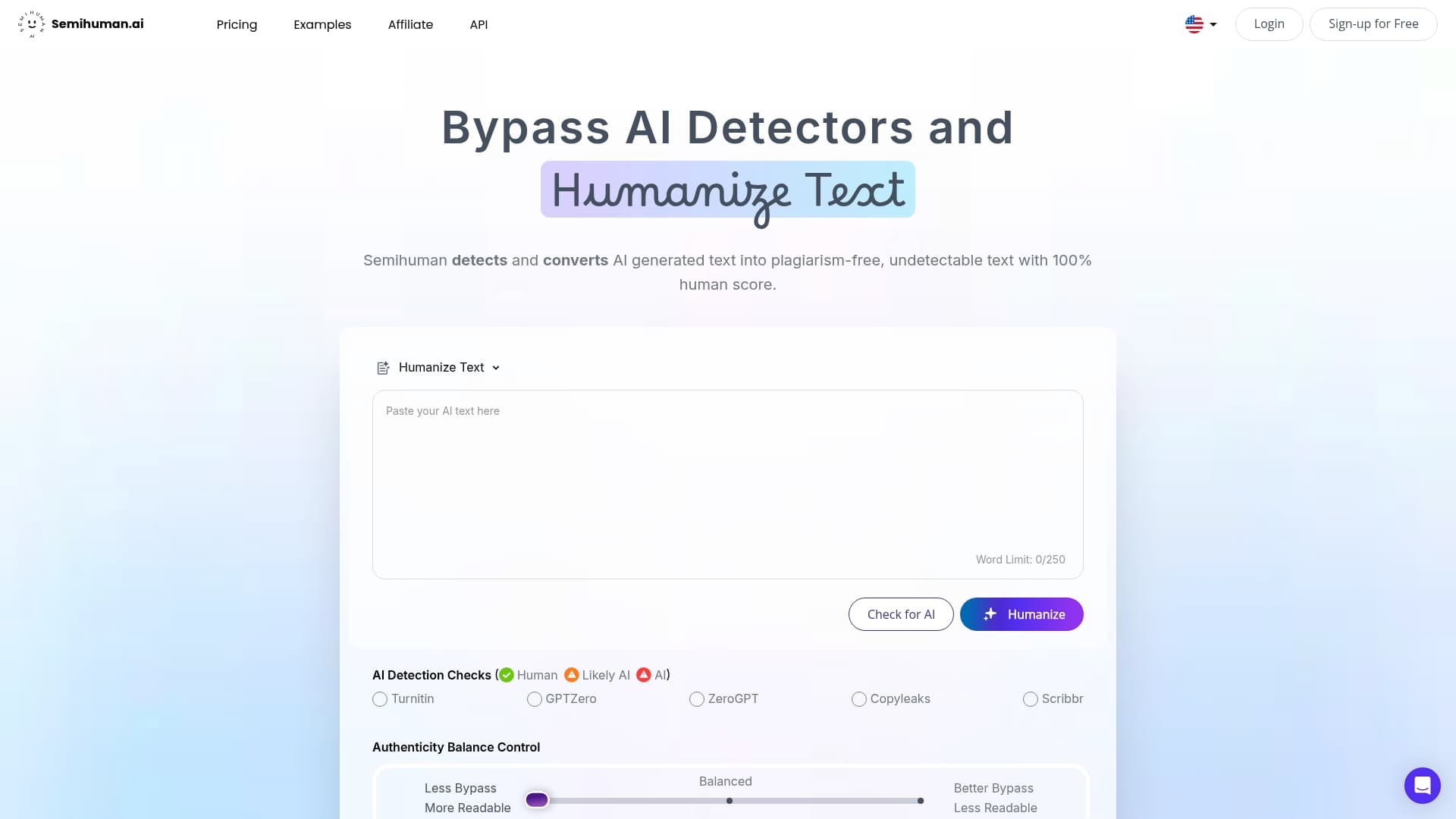
Semihuman.ai offers plans suited to both sides of that problem. The Free, Basic, and Pro plans work for marketing teams humanizing AI-drafted email variants or landing page snippets directly through the interface. The Developer, Business, and Enterprise plans give engineering teams API access to run humanization as a step inside an existing personalization pipeline, so dynamic content gets a readability pass before it ever reaches a customer. For a tool built around AI-assisted content workflows and real-world use cases, the examples compiled by Axio Networks are worth a look alongside your own pilot.
Yes, when it is built on first-party data and real decisioning logic rather than guesswork. Companies that execute personalization well see measurable gains in revenue and customer response, with McKinsey reporting a 10 to 15% revenue lift among leaders.
Definitions of the "4 D's" vary across marketing sources and are not tied to a single standard framework. The more consistently cited foundation across research is first-party data, decisioning, modular content, and measurement, which function together as the practical requirements for personalization at scale.
Personalized engagement refers to interactions tailored to an individual customer's behavior, preferences, or lifecycle stage rather than a generic message sent to everyone. It depends on a system predicting what a specific customer needs, which Nielsen Norman Group distinguishes from customization, where the user manually sets their own preferences.
Personalization improves customer experience by matching content, offers, and timing to a customer's demonstrated behavior instead of a one-size-fits-all approach, which reduces irrelevant messaging. It works best when paired with visible privacy controls, since customers who feel in control of their data respond more positively to being personalized to, according to Think with Google's research.
The biggest risk is measuring personalization with standard A/B tests alone, which can overstate impact by confusing customer intent with the actual effect of the message. Running a holdout group over a full purchase cycle gives a more accurate read on whether personalization is truly driving the result.



Start
Humanizing
for Free!
Humanize