
Loading...

Readers connect with a human voice because it makes them feel a real person is speaking to them from the page. That feeling is built from specific, learnable choices: sentence rhythm, pronouns, contractions, concrete images and a clear point of view. It also holds up when a draft starts with AI, as long as the text is reworked until it reads like a person wrote it. That is the job we built Semihuman to do.
Below: what voice is, what studies show about why it works, the exact moves that create it, and how to keep it when you write at volume.
The phrase gets used loosely, so start with a working definition. A 2017 guide to scientific writing in BMC Medical Education defines writer's voice as what creates the illusion that the writer is speaking directly to the reader from the page. Note the word illusion. Voice is an effect, produced by craft.
The National Council of Teachers of English publishes a chapter by Peter Elbow that separates five senses of voice: audible voice, dramatic voice, a recognizable or distinctive voice, voice with authority, and resonant voice, or presence. For a blogger or marketer, the most useful ones are the distinctive voice (readers can tell it is you) and presence (readers feel someone is there).
The same chapter explains why sound matters even on a silent page. Readers project speech sounds onto text, so words that are easy to say and idiomatic feel more "hearable." Psychologists cited by the National Centre for Writing have shown that silent readers still sound words out internally. In a survey of Guardian readers, one in seven said the voices they heard while reading were as vivid as a real person speaking.
So when we say a text has a human voice, we mean it survives being heard in the reader's head. It has rhythm, it uses the words people actually say, and it sounds like someone with something at stake.
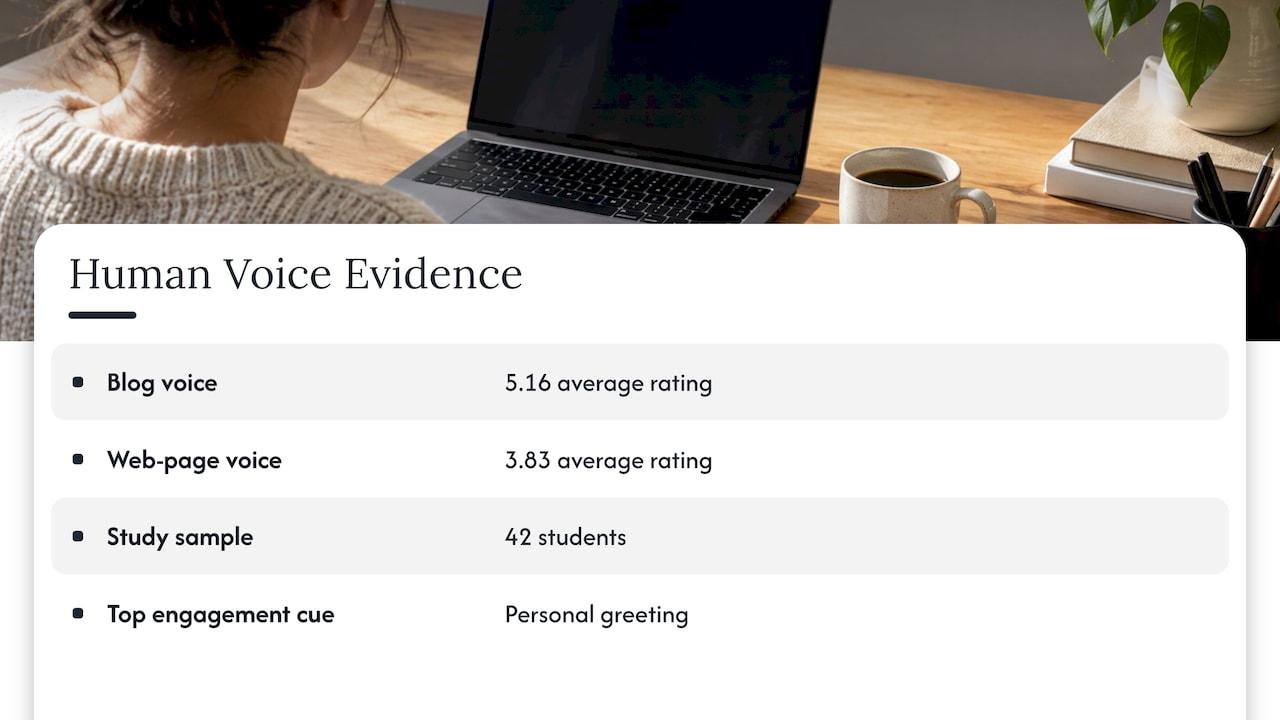
The best-known evidence comes from a study in the Journal of Communication. Forty-two students read either a corporate blog or a traditional web page. The blog readers perceived a much more conversational human voice (an average of 5.16 against 3.83 on the scale used, p < .001). Perceived human voice also correlated significantly with trust, satisfaction, control mutuality and commitment. The sample is small and dates from 2006, but the direction has been repeated since.
A 2021 experiment at Tilburg University tested online brand messages. Personalization, informal speech and invitational rhetoric each made a message feel more personal and engaging than a basic version (all p's ≤ 0.001). A personal greeting contributed the most to perceived engagement.
Writer Estelle Erasmus, writing for the American Society of Journalists and Authors, explains that voice shows a writer's personality, wit and quirks. That is what makes readers feel connected and curious. Facts are available everywhere. A point of view is not.
When a reader is absorbed, they stop evaluating and start following. Marketers call this narrative transportation. Storytelling that lifts brand engagement depends on exactly the qualities a human voice supplies: specific details, an identifiable narrator and a sense of movement. If you want the longer treatment, see our guide to storytelling techniques that hold an audience, and our complete guide to why readers prefer a human tone.
Voice sounds mysterious, but researchers who study it break it into techniques. A grounded-theory study of 21 health-research scholars in Medical Education argues that what readers experience as voice is the strategic use of a repertoire of techniques. Conventional ones include signposting and metacommentary. Others are evocative metaphor, plainspoken phrasing, humor and attention to cadence and sound.
That is good news. If voice is a repertoire, you can build it on purpose.
| Move | What it does | Example |
|---|---|---|
| Mix sentence lengths | Creates cadence, avoids a monotone | A long, winding sentence, then a short one. |
| Use "I" and "you" | Puts a person on the page and addresses the reader | "You have probably seen this happen." |
| Use contractions | Matches how people talk | "don't" instead of "do not" |
| Choose one vivid metaphor | Makes an abstract point memorable | "A style guide is a handrail, not a cage." |
| Open with the greeting or the point | Signals a real exchange | A direct answer in line one |
| Read it aloud | Exposes stiff or breathless lines | Mark every spot where you stumble |
These are the ones Watling's guide recommends: first- and second-person pronouns, contractions, mixed sentence lengths and metaphors, plus reading your work aloud. West Virginia University's communications team says much the same in its Tone and Voice Playbook. It tells writers to always sound human, read aloud to check the text sounds conversational, prefer shorter sentences or commas to the em dash, and use active voice because it is clearer and more direct.
The Tilburg findings translate directly into copy. Address people by name where you can, write the way you would talk to one customer, and phrase calls to action as invitations rather than commands. Agencies that work on adaptive, personalized content apply the same idea to site experiences: the greeting and phrasing change with who is reading.
Here is a flat sentence from a product page:
"Our platform facilitates the optimization of content workflows for enhanced efficiency."
And a revision using the moves above:
"You write the draft. We help you get it out the door faster, in words your readers would actually say."
The second version is shorter, speaks to "you," uses a contraction-friendly rhythm and replaces abstractions with something a reader can picture. Nothing about the facts changed. Only the voice did.
A common worry is that voice means writing the same way everywhere. It does not. Communication Commons frames voice as attitude: the sense of an authentic person behind the words. It also notes that nobody has a single voice. How we sound shifts with context, although a common thread can run through everything we write. Erasmus puts it the same way: you have one voice, and your tone changes with the audience, from academic to jovial.
A practical way to hold the thread:
This matters most for teams. When several writers, or a writer and an AI tool, produce text for one brand, the thread is the only thing keeping the pieces recognizable.
Many creators, marketers and students now start with an AI draft. The question is whether readers will still connect with the result. A multi-country experiment in PLOS One, published in March 2026, tested AI-generated research blog content. It found that AI authorship had no significant effect on readers' reported likelihood of engaging with the blog. The authors also advise tailoring prompts to the intended audience. In other words, the audience and the editing decide the outcome more than the tool does.
What tends to separate a flat AI draft from a connecting one is the same repertoire described above. Drafts often come out evenly paced, abstract and impersonal. The fix is editing for voice:
The same principles apply to scripts and narration. Guidance on making narration sound natural stresses conversational phrasing and pacing, which is what a listener, and a silent reader, hears as authenticity.
For deeper how-tos, we have written on why AI writing needs editing, sounding less robotic naturally, eight tips for humanizing AI-generated text and how to write for your audience. To see before-and-after text, browse these examples of humanized text.
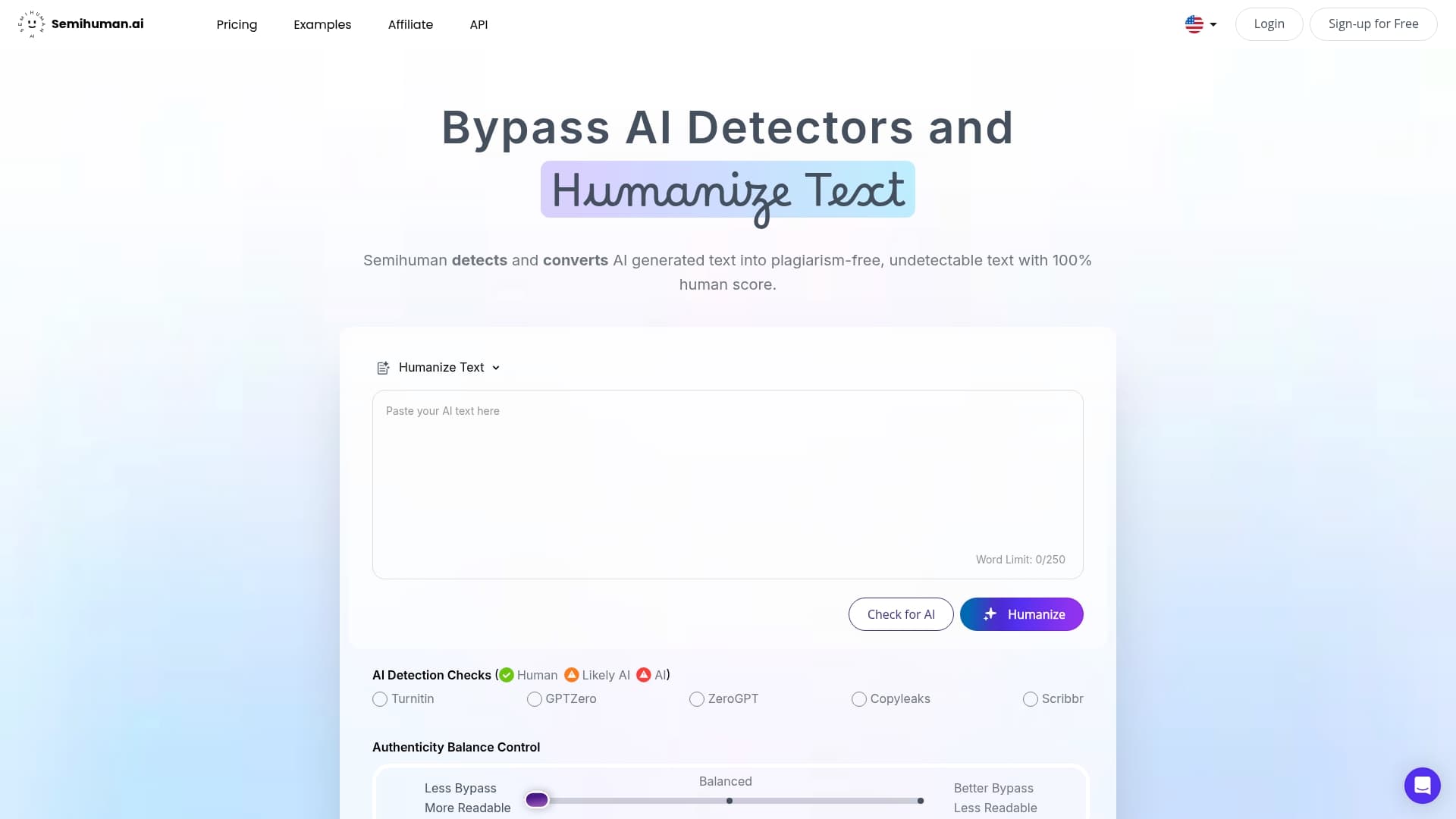
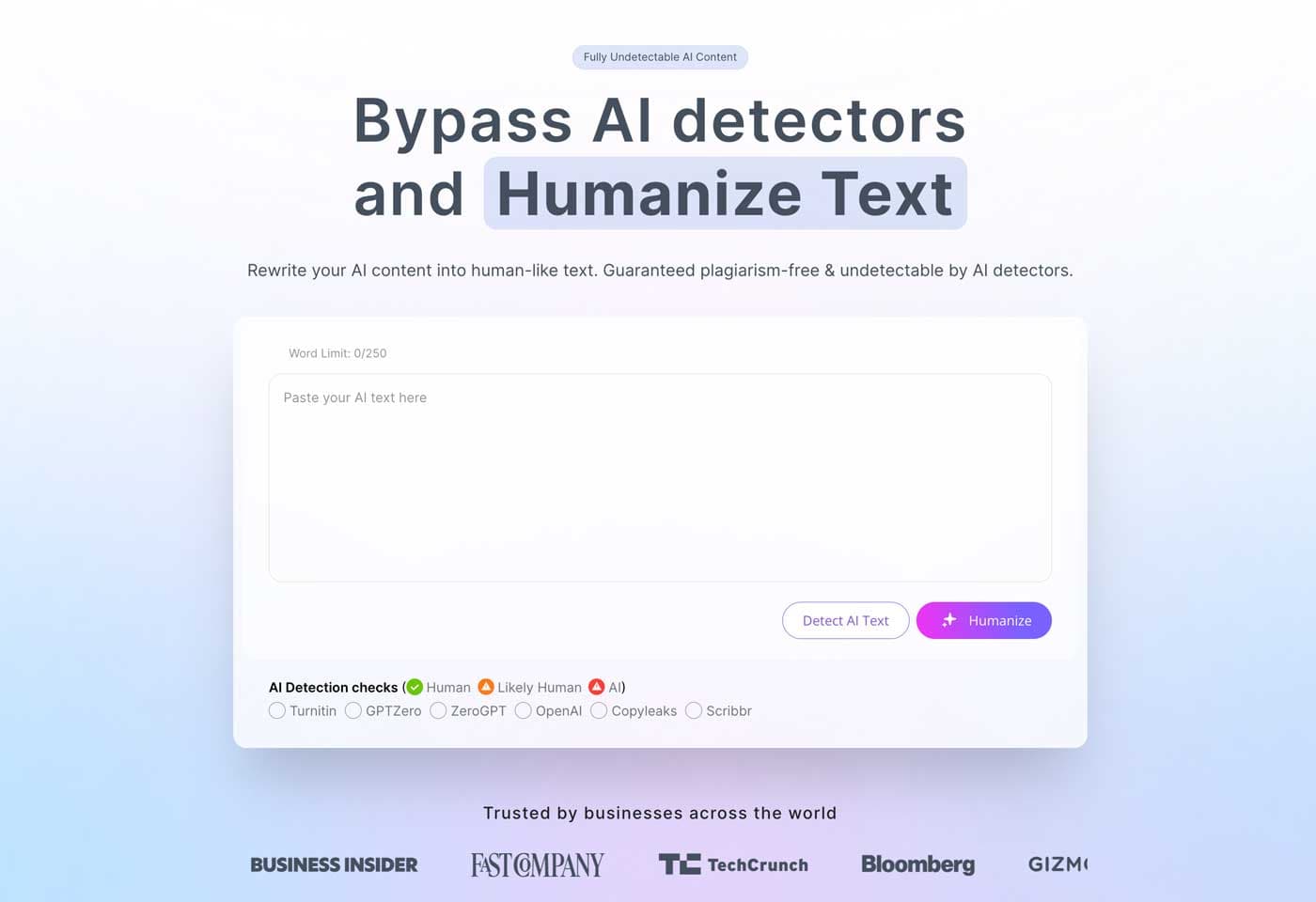
Editing every draft by hand works for one post. It gets slow when you publish weekly, run a content agency or handle coursework and reports. Semihuman is a web-based tool that detects AI-generated text and humanizes it, restructuring it for natural readability and integrating keywords for SEO. Individuals can start on the Free, Basic or Pro plans on our plans page. Teams that want to build humanizing into their own workflow can use the Developer, Business or Enterprise options through API access.
The aim is simple: you keep your ideas and your facts, and the text comes back sounding like a person with a point of view. Then you add the last layer yourself, the detail only you know.
Voice is not decoration. It is the reason a reader stays past the second paragraph, and the reason they remember who wrote it.
We built Semihuman because creators, marketers, students and journalists increasingly start from an AI draft, and that draft rarely sounds like anyone in particular. Our approach is to restructure the text so it reads naturally while keeping the meaning intact, and to support SEO goals at the same time. That is what we mean by humanizing: not changing what you say, but how it sounds when someone reads it.
We also think the best results come from combining the tool with your own judgment. Run the draft through, read it aloud, add the example only you could give. Do that and the voice is yours, whatever started the draft.
Tilen
The evidence points that way. In the Journal of Communication study, perceived human voice correlated with trust, satisfaction and commitment. Tilburg University's experiment found that personal, informal and inviting messages felt more engaging than basic ones. Fit the level of informality to your audience and format.
No. Voice is the consistent personality behind your writing. Tone is how that personality adjusts to a situation, such as a formal report versus a friendly newsletter. You keep one voice and flex the tone.
Start by reading your drafts aloud and marking every line that does not sound like you. Then use the repertoire: mixed sentence lengths, pronouns, contractions, a fitting metaphor, plain words. Over time, collect the sentences you like best and use them as your reference.
Yes, when it is edited for rhythm, specificity and personality. A 2026 PLOS One experiment found AI authorship had no significant effect on how likely readers were to engage with a blog. A humanizing tool such as Semihuman speeds up the restructuring, and your own details finish the job.
It helps the signals you control: readers stay longer and engage more with text that sounds like a person. Pair it with natural keyword placement so the text reads well and is easy to find.



Start
Humanizing
for Free!
Humanize