
Loading...

Tackling content fatigue means publishing fewer higher-value pieces, diversifying how you present them, and using simple audience signals to personalize delivery and timing. It also means tracking engagement decay and building planned refresh cycles into your calendar, the same way platforms like LinkedIn show fatigue past certain posting thresholds.
TL;DR:
- Treat falling click through rates, declining dwell or watch time, and unsubscribe spikes across two or three signals as signs of fatigue, not a fluke.
- X posting above 10 times daily correlates with roughly 14% lower engagement per post; LinkedIn fatigue tends to emerge above 12 to 15 monthly posts.
- Refresh evergreen pieces by changing at least two elements among the headline, visuals, and data, then repromote them instead of adding more content.
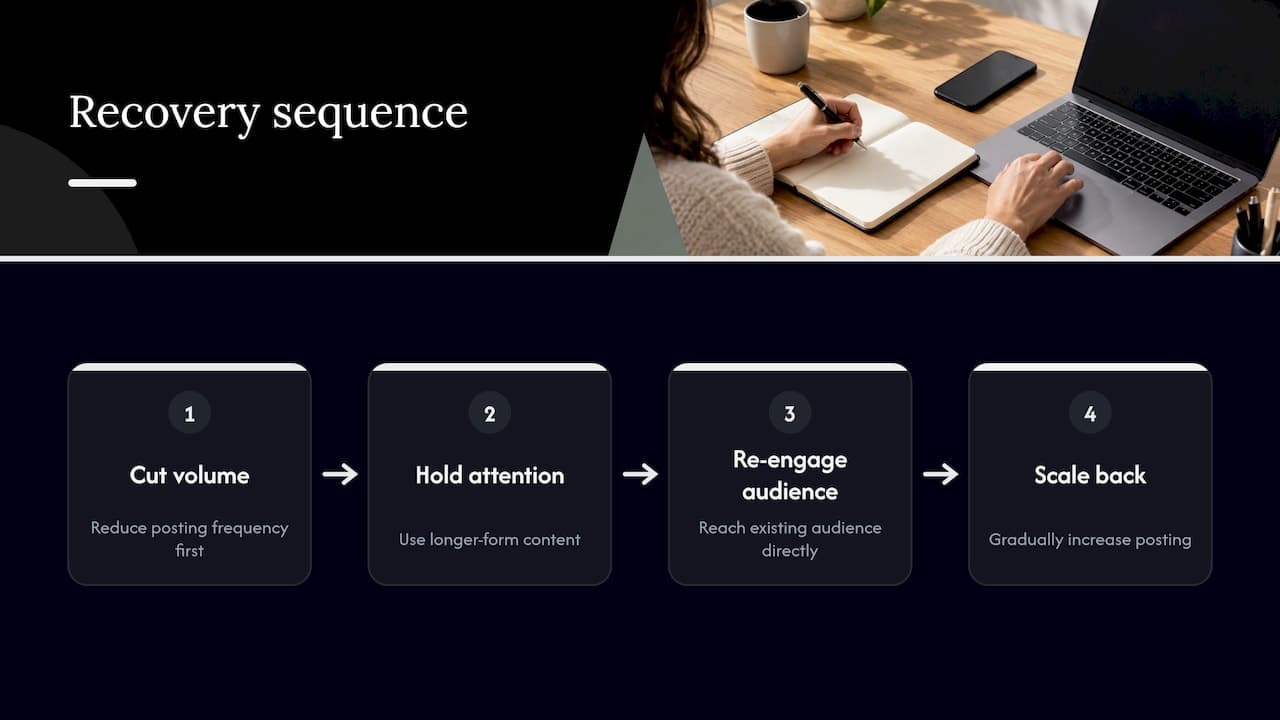
- After reach drops, reduce frequency without stopping, publish pieces that hold attention beyond 61 seconds, reengage subscribers directly, then increase cadence after engagement exceeds baseline.
- Plan renewal breaks into the calendar: engagement plateaus after roughly 21 weeks of continuous weekly publishing, so use a week to refresh older pieces.
Content fatigue happens when an audience stops responding to what you publish, not because you stopped creating but because what you're creating has lost its edge. It's different from creator burnout, which is about your own exhaustion rather than your audience's waning interest, though the two often arrive together.
Most fatigue traces back to a handful of causes: posting more often than the content justifies, repeating the same angles on the same topics, low novelty in format or framing, weak personalization, and algorithmic throttling that quietly suppresses reach before you notice anything is wrong.
A few diagnostics catch this early:
If two or three of these move at once, you're looking at fatigue, not a fluke week.
Fixing fatigue is less about doing more and more about doing the right things in the right order. Here's the sequence that tends to work.
For format diversification specifically, visual storytelling techniques can help the same story land differently across channels, and updating the visuals inside older posts is one of the easier wins when refreshing evergreen content.
Audience listening deserves its own emphasis. Segmenting by behavior rather than demographics alone, and using audience-centric content planning to structure what you learn, tends to surface preferences faster than broad surveys.
Pro Tip: Keep one evergreen piece "in reserve" each month specifically for refreshing, so repromotion never feels like an afterthought.
A handful of numbers tell you whether fatigue is real and whether your fixes are working.
Posting above platform-specific thresholds correlates with measurable engagement drops. On X, posting more than 10 times a day correlates with roughly 14% lower engagement per individual post, and on LinkedIn, exceeding 12 to 15 posts a month tends to trigger fatigue.
To validate a change, run a short experiment: hold format and topic constant, vary only the one tactic you're testing, over at least two to three weeks, and compare engagement per post against your baseline before declaring success.
A sudden reach drop can come from two different problems that look identical on the surface: an algorithmic cooldown, where the platform quietly throttles distribution after a pattern of high-frequency, low-dwell posts, or genuine audience disengagement, where people have simply tuned out. Pausing entirely rarely fixes either one on its own.
A more reliable sequence, drawn from practitioner data on recovery patterns, looks like this:
Pro Tip: Watch engagement per post, not total reach, when deciding whether to resume your normal cadence. Reach recovers after engagement does, not before.
Across the creator and brand campaigns that have pulled out of a fatigue slump, the pattern tends to repeat: a sharp cut in volume, followed by content specifically engineered to hold attention, followed by a deliberate push to re-engage the existing audience rather than chase new reach. Newsletter-driven brands that noticed falling open rates often found that segmenting sends by past behavior and pairing that with AI-assisted personalization in email brought re-engagement back faster than simply changing subject lines.
On the social side, accounts that experienced throttled reach after sustained high-frequency posting generally recovered only after dropping frequency and replacing quick, low-effort posts with longer-form pieces designed to keep people watching or reading past the first few seconds. The common thread isn't a clever trick. It's sequencing: cut first, hold attention second, re-engage directly third, then scale back up. Campaigns that skipped straight to "post more to compensate" tended to extend the slump rather than shorten it, since more low-value volume is exactly the pattern that triggered the cooldown in the first place.
A calendar that never leaves room for a pause is a calendar that eventually produces fatigue on both sides, the audience's and the team's. Consistent posting raises engagement over sporadic posting, but that same research found engagement plateauing after roughly 21 weeks of continuous weekly output, which is a strong argument for building planned breaks into the schedule rather than treating consistency as an unbroken streak.
A workable structure blocks the calendar into cycles: a few weeks of regular output, a short renewal week where the team focuses on refreshing older content instead of producing new material, then back to regular cadence. Renewal weeks are also when digital content tips for sustaining organic engagement and evergreen refresh tactics do the most good, since there's bandwidth to actually revisit and improve rather than just publish.
A few habits do most of the work. I keep a running content bank so ideas don't have to arrive on deadline, I run themed weeks to avoid repeating the same angle twice in a row, and I do a short weekly audit of what underperformed and why.
The signal to refresh or retire a piece is simple: once engagement on a topic drops two cycles in a row compared to its own history, it's time to change the format or let it rest.
— Tilen
When a topic needs a new angle but the words keep coming out the same way, Semihuman focuses on restructuring and humanizing text so recurring subjects read fresh rather than recycled.
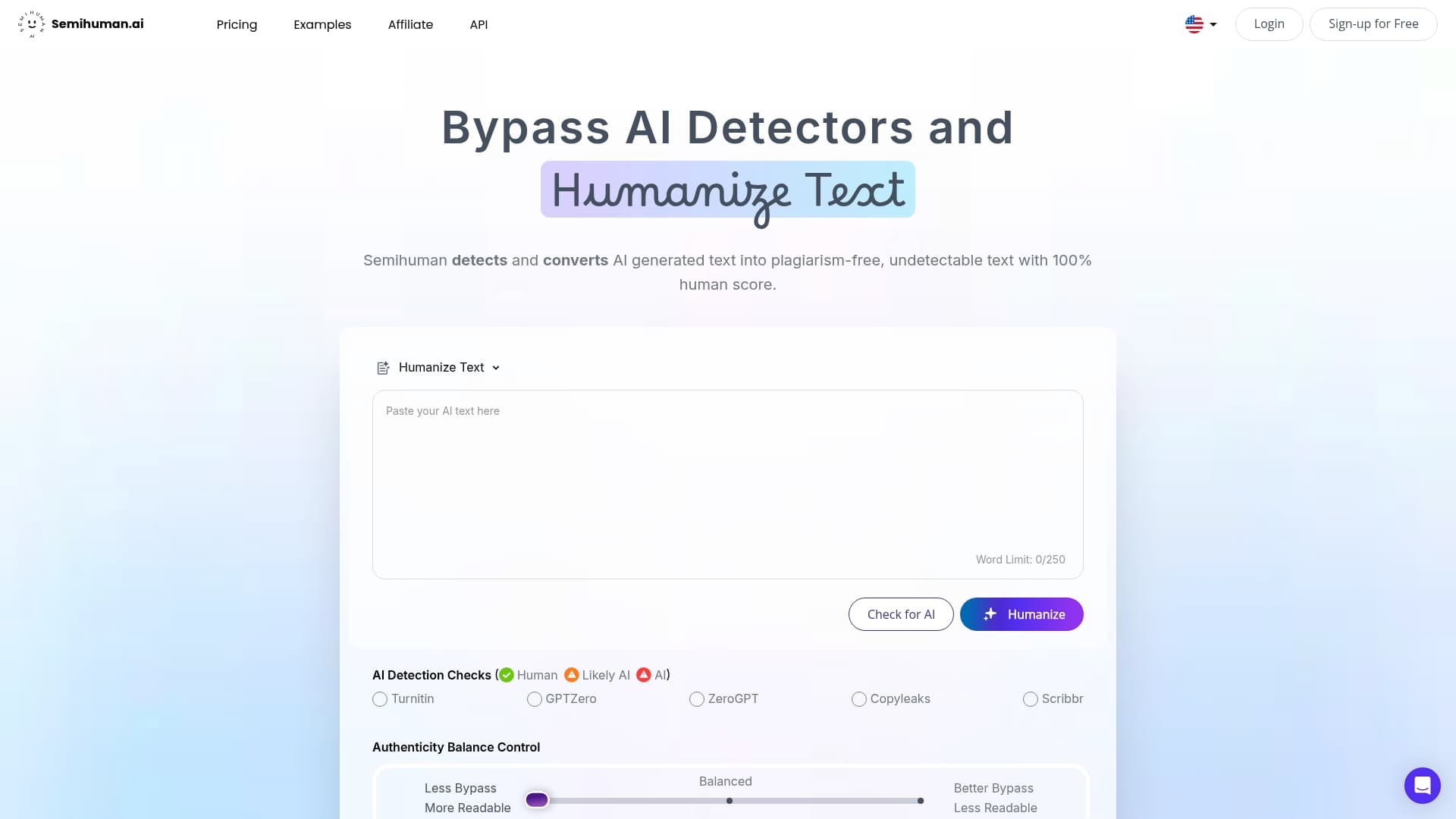
Explore the Free, Basic, and Pro plans to test it on your next repurposed piece, or check the Developer, Business, and Enterprise API options if your team needs this built into an existing pipeline.
Reducing digital fatigue starts with cutting posting volume in favor of fewer, higher-value pieces and diversifying formats so the same idea doesn't feel repetitive. Perceived recommendation novelty is strongly linked to lower information fatigue, so introducing variety in topics and formats directly reduces audience overload.
The core fix is narrowing focus: fewer, more curated recommendations beat a high volume of similar options, since audiences disengage when every post feels like another choice to sort through. Segmenting followers by interest and personalizing which content reaches which segment also reduces the sense of being overwhelmed by sameness.
There's no universal number, but posting more than 10 times a day on X correlates with about 14% lower engagement per post, and LinkedIn tends to show fatigue past 12 to 15 posts a month. Staying under those thresholds and prioritizing quality over frequency tends to protect engagement better than maximizing output.
Recovery depends on consistently publishing attention-holding content and re-engaging your existing audience directly rather than waiting passively. Practitioner data suggests recovery often requires content that holds attention past 61 seconds, combined with reduced frequency, before reach gradually returns.
Refreshing evergreen content by updating the headline, visuals, and a key data point can restore traction without adding to total output, making it a practical complement to new content rather than a full replacement. It works best when paired with occasional genuinely new pieces so the audience still sees forward movement.



Start
Humanizing
for Free!
Humanize